
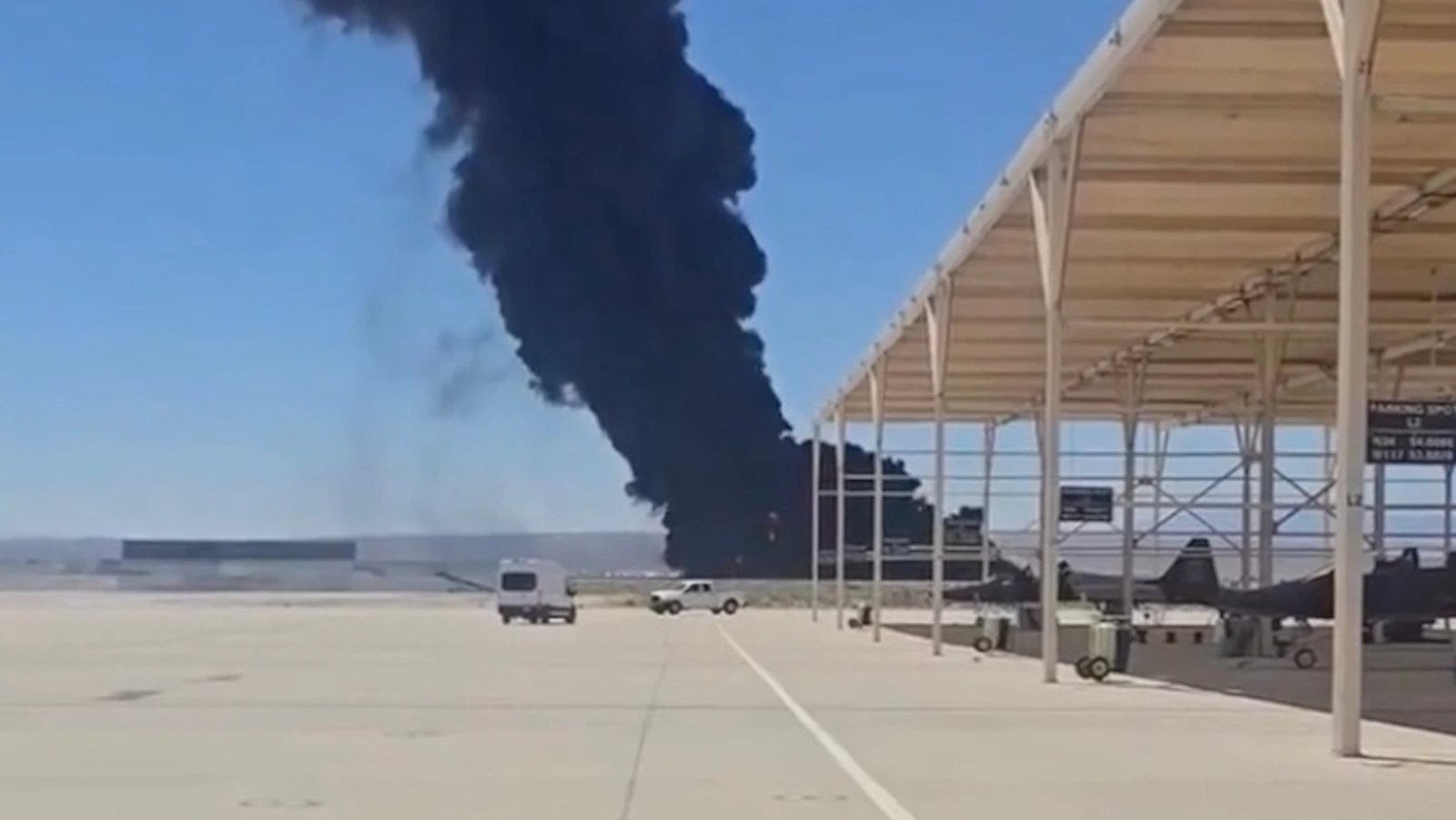
8 Dead in Air Force B-52 Crash Shortly After Takeoff
Cyberzenhub.com – On Monday, June 15, 2026, an Air Force B-52 Stratofortress bomber crashed shortly after takeoff at Edwards Air Force Base in California, resulting in the tragic loss of eight lives. The incident, which occurred during a routine test mission, led to a fire and immediate emergency response. Col. James Hayes, deputy commander of the 412th Test Wing, confirmed the crash during a press briefing, calling it a “horrible tragedy” and honoring the eight “great Americans” who perished. The crash has sparked a detailed investigation into its causes, with officials emphasizing the need to understand the sequence of events that unfolded mere moments after departure.
“We lost eight great Americans,” said Col. James Hayes, deputy commander for the 412th Test Wing at Edwards Air Force Base, during a Monday press briefing. The crash, which occurred just moments after takeoff, has left the base in mourning and prompted a thorough examination of the incident’s circumstances. Hayes noted that the crash was deemed “un survivable” based on analysis of the available footage, highlighting its severity and the urgency of the investigation.
Crash Details and Immediate Response
The B-52H Stratofortress involved in the crash was en route to a test mission when it plummeted shortly after lifting off the runway. Emergency personnel arrived swiftly at the scene, working alongside base officials to secure the area and assist any survivors. The crash occurred at approximately 11:20 a.m. local time, and the base temporarily closed its airfield, redirecting all incoming aircraft to alternative locations. Operations were suspended on Tuesday as investigators delved into the incident, with next-of-kin notifications expected to conclude within 24 hours.
The aircraft, which had a crew of military personnel, government civilians, and contractors, was described as experiencing a critical failure during the initial phase of flight. Video footage of the crash has been crucial in analyzing the event, with experts focusing on the rapid progression of the disaster. The B-52’s ability to sustain flight for extended periods before crashing has drawn attention, raising questions about the reliability of its systems during high-stakes missions.
B-52 Stratofortress: A Key Asset in Military Aviation
The B-52 Stratofortress, a long-range bomber introduced in the 1950s, has been a vital component of U.S. military aviation for decades. Designed by Boeing, the aircraft is renowned for its versatility, capable of carrying both conventional and nuclear payloads over vast distances. Its presence at Edwards Air Force Base underscores its role in testing and maintaining operational readiness. Despite its age, the B-52 continues to be a symbol of durability and strategic importance in American defense operations.
Edwards Air Force Base, situated in the Mojave Desert, has a rich history of aviation milestones, including the first supersonic flight and experimental aircraft testing. However, the recent crash has marked a somber note in this legacy. While test missions are routine, the incident has raised concerns about safety protocols and the potential for mechanical or human error. Officials are now reviewing the aircraft’s maintenance records and flight data to determine the root cause of the crash.
Ongoing Investigation and Safety Concerns
The cause of the crash remains under investigation by the Air Force and NASA, which collaborate on test flights at the base. Hayes mentioned that the process could take several months, requiring a comprehensive analysis of all available evidence. This includes examining the aircraft’s systems, pilot actions, and environmental conditions at the time of the incident. The crash has intensified discussions about safety measures in place for routine missions, especially those involving older aircraft models.
While the exact cause has not yet been disclosed, the review of footage has already highlighted critical moments leading to the disaster. The B-52’s continued use in test missions, despite its long service history, demonstrates the aircraft’s enduring value. Yet, this incident serves as a reminder of the risks associated with such operations. The names of the victims will be shared once next-of-kin notifications are completed, a step that will follow the ongoing investigation into the crash’s circumstances.