Washington DC Voters Cast Ballots in Crucial Primaries Amid Trump’s Influence
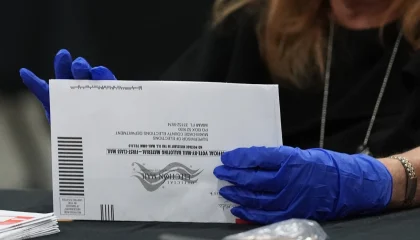
Cyberzenhub.com – Washington DC voters cast ballots in pivotal local elections this Tuesday, determining the future of the city’s leadership. With President Donald Trump’s policies reshaping the capital, the outcome of these races carries significant weight for both local and national politics. The simultaneous selection of a new mayor and congressional delegate marks a turning point, highlighting the city’s role as a microcosm of broader political trends and its ongoing struggle for autonomy under federal governance.
The Role of Washington DC Voters in Shaping Governance
These elections are central to Washington DC voters cast ballots, as they directly influence the city’s political direction. The mayoral race, in particular, has drawn sharp attention due to the retirement of long-serving Mayor Muriel Bowser. Her decision to step down after three terms has created an opportunity for new candidates to emerge, with Democratic contenders like Janeese Lewis George and Kenyan McDuffie vying for control. The process also features a unique voting system, allowing voters to rank choices and potentially altering the final results.
The congressional delegate race, meanwhile, is a high-stakes contest for Eleanor Holmes Norton’s successor. Norton, who has represented the district since 1991, is leaving a legacy of advocacy for home rule, while her rivals, Brooke Pinto and Robert White Jr., face the challenge of securing her seat. The inclusion of rank-choice voting in both races adds complexity, as Washington DC voters cast ballots may need to navigate unfamiliar procedures to ensure their voices are heard effectively.
Trump’s Policies and the Capital’s Political Tensions
Trump’s administration has intensified the political divide in Washington DC, where federal oversight continues to dominate local affairs. The city’s limited self-governance, historically shaped by federal leaders, has become a focal point of debate as Trump’s policies seek to further centralize control. A recent federal law enforcement surge, including the prolonged National Guard presence, has raised concerns about autonomy, with residents fearing increased federal intervention in city matters.
Washington DC voters cast ballots are also grappling with the economic effects of Trump’s fiscal policies. Budget cuts have led to the loss of thousands of jobs, particularly in departments like the Department of Government Efficiency. These changes have sparked discussions about the balance between federal authority and local decision-making, as candidates campaign on promises to address both the city’s challenges and its residents’ priorities. The stakes are heightened by the potential for Trump to push for a federal takeover of D.C. governance.
“As the capital of the United States, Washington DC voters cast ballots are uniquely positioned to influence the nation’s direction,” noted Amanda Huron, a University of the District of Columbia professor. “Their choices reflect not just local needs, but broader implications for the country’s political framework.”
Candidates and the Future of the Capital
Mayor’s race candidates are emphasizing policies that resonate with Washington DC voters cast ballots. Janeese Lewis George, a democratic socialist, has pledged to tackle the city’s affordability crisis, blaming Trump’s policies for deepening economic instability. Kenyan McDuffie, meanwhile, focuses on public safety, proposing a substantial increase in police officers to address violence. Both candidates highlight the importance of local representation in a city often overshadowed by federal priorities.
The delegate race reflects similar themes, with candidates positioning themselves as champions of D.C. interests. While the exact impact of the election remains uncertain, the competition underscores the city’s desire for more autonomy. As Washington DC voters cast ballots, they are not only selecting leaders but also setting the tone for the next phase of political engagement in the nation’s capital. The results will serve as a barometer for how residents view the federal government’s role in their governance.