Legal Action Challenges Trump’s ‘National Garden of American Heroes’ Plan in Washington, D.C.
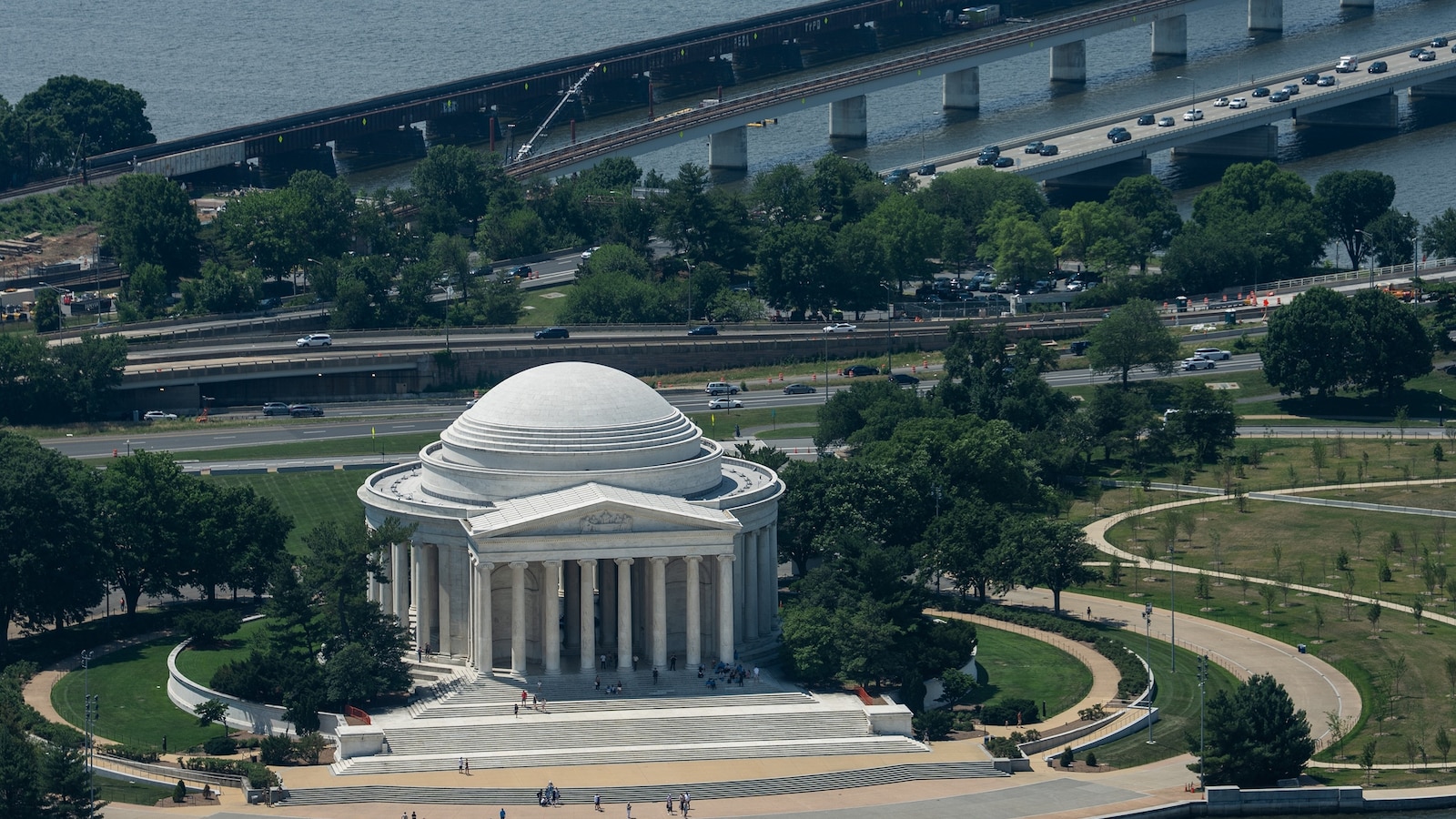
Cyberzenhub.com – A new federal lawsuit has emerged, targeting President Donald Trump’s ambitious proposal to transform West Potomac Park in Washington, D.C., into a “National Garden of American Heroes.” The legal challenge, filed on Monday in the U.S. District Court for the District of Columbia, argues that the Department of the Interior and the National Park Service have disregarded a congressional decree that restricts the placement of new commemorative works within the “great cross-axis of the Mall.” This area, which includes West Potomac Park, is home to iconic landmarks such as the Lincoln Memorial to the north and the Thomas Jefferson Memorial to the south. The suit contends that the Trump administration’s plan violates the law by prioritizing presidential aesthetics over the preservation of the National Mall’s historical significance.
Related: Fine Arts Panel Approves Trump’s East Wing Ballroom Expansion
Similar to other D.C. projects under Trump’s leadership, the “National Garden of American Heroes” has sparked controversy over its adherence to federal regulations. Earlier this year, a fine arts panel gave the green light to Trump’s redesign of the White House East Wing ballroom, a decision that critics argued undermined the city’s architectural heritage. The current lawsuit echoes these concerns, accusing the administration of bypassing established procedures to alter the park’s landscape. The National Mall, a symbol of American history and civic pride, is now at the center of a legal battle over its future.
Related: Trump’s Name Removed from Kennedy Center Following Court Order
West Potomac Park, located between the Lincoln Memorial and the Thomas Jefferson Memorial, currently houses several memorials, including the Korean War Veterans Memorial, the Martin Luther King, Jr. Memorial, and the Franklin Delano Roosevelt Memorial. These structures, many of which were established in the 19th and early 20th centuries, are integral to the park’s role as a national heritage site. The lawsuit asserts that Trump’s proposed additions will disrupt this legacy, turning a historically preserved area into a showcase for contemporary political symbolism.
“The West Potomac Plan is unlawful. Congress has made clear that the National Mall is a ‘substantially completed work of civic art’—not a personal sandbox for each President to renovate however he likes,” the suit states, highlighting the conflict between presidential initiatives and legislative oversight.
According to the National Endowment for the Humanities, the proposed garden would feature 250 life-sized statues of notable figures, including founding fathers, musicians like Johnny Cash, chefs such as Julia Child, athletes like Kobe Bryant, and icons like Muhammad Ali. Each artist could receive up to $200,000 to create three statues, with the project aiming to celebrate American achievements through public art. However, the lawsuit disputes this, claiming that Congress never authorized the construction of new monuments in the park and that the administration has failed to follow required legal steps.
Trump himself has framed the project as a transformative endeavor, describing it as a way to convert “a BARREN expanse of Prime Waterfront Real Estate along our Mighty Potomac River” into a “World Class Masterpiece.” On his social media platform, he emphasized the visual appeal of the space, promising “elegant landscaping” and “beautiful statues” to elevate Washington, D.C., as the “Safest and Most Beautiful Capital in the World.” Yet, critics argue that the plan prioritizes political messaging over historical preservation, with the National Mall’s layout being reimagined to reflect the administration’s vision rather than its original purpose.
“A spokesperson for the Interior Department remarked, ‘It is perplexing that anyone would question an exhibition honoring American greatness by spotlighting pivotal historical figures.’ The National Park Service has yet to comment on the matter, leaving the administration’s justification for the project to stand unchallenged.”
The lawsuit underscores the administration’s alleged pattern of ignoring procedural requirements, citing previous projects like the Lincoln Memorial reflecting pool resurfacing and the ‘Triumphal Arch’ as examples. These initiatives, while praised by some for their modernization, have drawn criticism for sidelining public and expert input. The groups involved in the legal action claim that Trump’s team has systematically bypassed Congress, using opaque funding methods to advance their agenda. This approach, they argue, sets a dangerous precedent for the management of public land in the nation’s capital.
Historians and preservationists stress that the National Mall was designed as a cohesive, national monument in the late 19th century, with its layout intended to reflect the United States’ collective heritage. The current lawsuit challenges the notion that the park should be used as a canvas for individual presidential projects, arguing that its designation as a “substantially completed work” means it should be protected from alterations without congressional approval. The case also highlights the tension between political power and the role of public institutions in safeguarding historical narratives.
Legal experts warn that if the lawsuit succeeds, it could halt the construction of the garden and force the administration to seek legislative backing. The groups involved, which include cultural heritage organizations, are urging the court to intervene and prevent the project from proceeding without proper authorization. “This disregard for legal requirements is part of the same playbook the administration has used to pursue other recent vanity projects,” the lawsuit states, accusing the Trump team of prioritizing political visibility over public accountability.
The National Endowment for the Humanities has defended the initiative, stating that the statues will honor individuals who have shaped American history. However, the lawsuit counters that the current proposal does not meet the criteria for a new commemorative work, as defined by Congress. The conflict has sparked debates about the balance between innovation and tradition in urban design, with opponents fearing that the National Mall will become a fragmented collection of presidential tributes rather than a unified symbol of national identity.
Implications for National Heritage and Public Land Management
As the legal battle unfolds, the case raises broader questions about how public land in Washington, D.C., is governed. The National Mall, which stretches over 18 acres, has long been a focal point for presidential initiatives, but its status as a protected area is now being tested. The lawsuit’s emphasis on congressional oversight underscores the importance of legal frameworks in preserving the integrity of historical sites. If the court rules in favor of the organizations, it could set a precedent that requires future projects to undergo stricter review before implementation.
Meanwhile, the Trump administration continues to defend its approach, arguing that the National Garden of American Heroes will enhance the park’s appeal and foster civic pride. The project’s supporters point to the diversity of figures included in the statue collection as evidence of its broad appeal, from political leaders to cultural icons. However, opponents insist that the initiative