Lesley Groff Claims Ignorance of Jeffrey Epstein’s Sexual Crimes
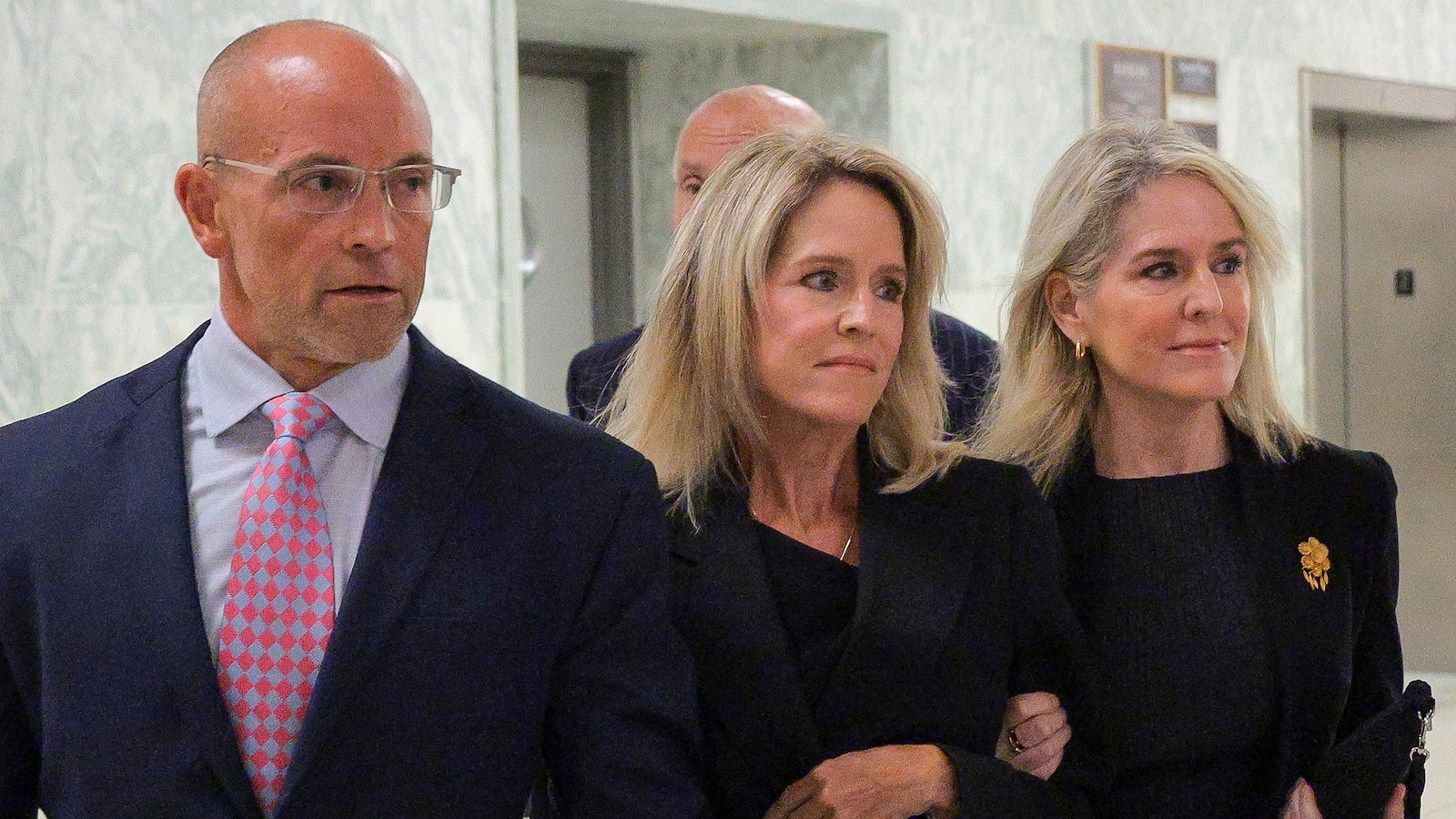
Cyberzenhub.com – In a recent House Oversight Committee hearing, Lesley Groff, the former executive secretary of Jeffrey Epstein, testified that she remained unaware of her boss’s alleged sex crimes, emphasizing her routine role in scheduling massages for him. The transcript, released Tuesday, highlights her efforts to distance herself from accusations of complicity, as the committee delved into the federal government’s handling of Epstein’s case and the broader network of accomplices he allegedly exploited.
Testimony Highlights: Groff’s Defense and Routine Responsibilities
Groff, who worked with Epstein in New York for over 18 years, described her job as primarily administrative, focusing on organizing his calendar and coordinating appointments. She maintained that her primary duty was to facilitate his schedule, including setting up massages, but never to select individuals for those sessions. During her testimony, she stated, “I never met these women, so I didn’t know if they were young or how old they were,” according to the transcript.
“
I thought that it was just something that he did, like going to the gym.
”
Groff also explained that Epstein had referred to her as “an extension of my brain,” underscoring his trust in her to manage his affairs. However, she claimed this relationship did not extend to her awareness of his sexual activities, stating that she viewed the massages as a standard part of his routine rather than a criminal act. Her testimony came amid ongoing scrutiny of Epstein’s operations, including his alleged partnerships with figures like Ghislaine Maxwell, who was also a central figure in his network.
Committee Challenges and Scheduling Dilemmas
The committee members and staff pressed Groff on how she could have been so unaware of Epstein’s predilection for sexualized massages. Rep. Raja Krishnamoorthi, D-Ill., posed a direct question: “You want us to believe that after 18 years working in the employ of Mr. Jeffrey Epstein that not on one occasion did you believe any of your contacts in setting up these appointments with Jeffrey Epstein were either a minor or an underage person, correct?” Groff responded affirmatively, asserting, “That is correct.”
“
This strains credulity, Ms. Groff.
”
Further questioning aimed to challenge her claim of innocence, with one attorney asking, “Ms. Groff, do you think that a 14-year-old sounds the same as a person in their 20s or 30s or 40s?” Groff replied, “It’s possible. I don’t know. I was not evaluating voices,” while adding, “Nobody ever sounded like they were underage.” Her responses underscored her belief that the practice of scheduling massages was routine and devoid of any malicious intent, even as the committee sought to establish her level of knowledge.
Groff’s Background and Epstein’s Network
Lesley Groff, now 59, described her early impressions of Epstein’s circle, which included prominent figures such as former presidents, actors, musicians, and scientists. “I actually felt lucky to have found such an amazing job. I was thrust into the lifestyles of the rich and famous,” she said in her opening remarks. This perspective, however, contrasted sharply with the later revelations of Epstein’s alleged criminal activities, which Groff said she initially dismissed as personal rather than systemic.
She recounted how Epstein and Maxwell “established guardrails” for her, instructing her to avoid associating with their friends. “Their business was none of my business,” she claimed, suggesting that her role was confined to administrative tasks. Yet, the committee’s inquiry revealed that Groff’s position as Epstein’s secretary placed her in a unique position to observe his interactions, raising questions about her potential knowledge of the full scope of his activities.
Epstein’s Legal Context and Groff’s Role
Groff’s testimony was framed within the broader context of Epstein’s legal troubles. She mentioned that Epstein first came under scrutiny in Florida in the mid-2000s, when the Palm Beach police and later the FBI investigated his operations. During this time, she said Epstein informed her that he had been set up for blackmail by a girl who falsely claimed to be underage. “It was a shakedown, he claimed, for money,” Groff explained, adding that she initially felt sympathy for him, believing he was a wealthy man struggling with trust issues.
She revealed that her awareness of the criminal investigation grew in 2007 when the FBI visited her home in Connecticut. “I let them in my house and sat with them on my sofa,” she said, describing the moment she first learned of the charges against Epstein. Despite this, she maintained that she had no personal involvement in the crimes, stating, “I hoped my interview would dispel the false notions that I knowingly enabled or conspired with him to commit his evil acts.”
Broader Implications and Related Cases
Groff’s participation in the committee interview was voluntary, with no oath or recording involved. This contrasts with her earlier testimony to the FBI in 2021, two years after Epstein’s death. Her attorneys noted that prosecutors had informed her in 2007 that she would not be charged for her role in the case. This information may have influenced her willingness to cooperate during the hearing, as she sought to clarify her position.
The committee’s focus on Groff is part of a larger investigation into how federal authorities handled Epstein’s case and those linked to him. Her testimony has sparked discussions about the extent of her knowledge, with critics arguing that her claims may not fully account for the systemic nature of Epstein’s operations. Meanwhile, other related testimonies, such as that of a former Epstein prison guard, have highlighted the widespread impact of his case on individuals connected to him, including personal threats and public scrutiny.
Public Reaction and Legacy of Epstein’s Network
Groff’s account has been met with mixed reactions. Some view her as a victim of circumstance, while others question how she could have remained so detached from Epstein’s alleged crimes. The hearing also brought attention to the role of Epstein’s associates, such as Maxwell, who was charged with aiding his crimes. Groff’s testimony, however, suggests that she may have been more of a passive participant, focused on administrative tasks rather than direct involvement in the sexual abuse.
Despite her claims of ignorance, the eight-hour interview revealed her deep familiarity with Epstein’s inner circle and operations. She described how the massages were a regular part of his schedule, yet admitted she never questioned their purpose. The committee’s inquiry into Epstein’s case continues to uncover new details, with Groff’s testimony adding to the complexity of the narrative surrounding his alleged exploitation of minors and the complicity of those around him.
As the investigation progresses, Groff’s statements may influence public perception of Epstein’s case. Her emphasis on routine and trust could be seen as a defense of her actions, but also as a reflection of the broader culture of secrecy and influence that Epstein cultivated. Whether her testimony will sway the narrative or reinforce skepticism remains to be seen, but it has undeniably placed her at the center of the ongoing scrutiny of one of the most high-profile sex crime scandals in modern history.