
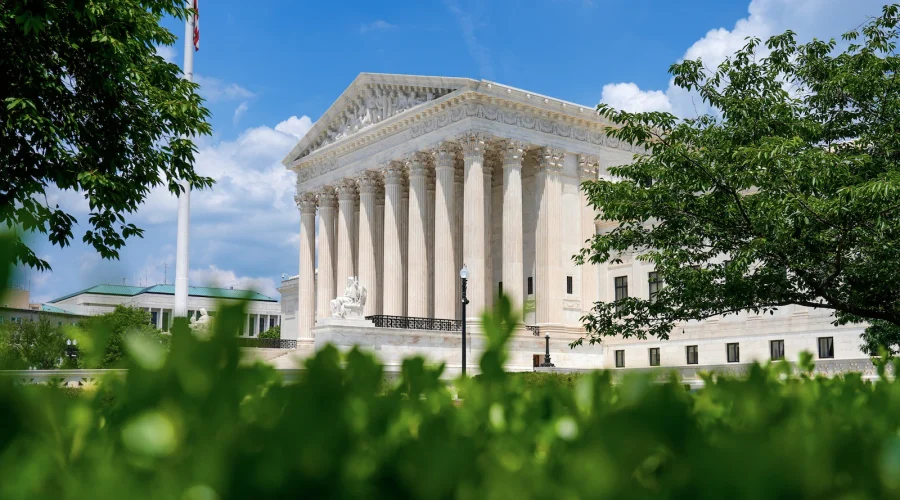
Supreme Court Affirms Michigan County’s Authority in Tax Foreclosure Ruling
Supreme Court sides with Michigan county – The U.S. Supreme Court on Tuesday upheld the practices of Isabella County, Michigan, in a landmark tax foreclosure case, dismissing a challenge that sought to adjust how properties are sold to recover unpaid taxes. The decision preserved the current system, allowing counties to auction off delinquent properties at prices determined by the legal process rather than market value. This ruling came after a contentious legal battle involving a family whose home was sold for significantly less than its open-market value to settle a $2,000 tax debt. The family had argued that the foreclosure process violated their constitutional rights, claiming the property could have fetched nearly $200,000 through standard real-estate channels.
At the heart of the dispute was the disparity between the auction price and the property’s market value. The homeowners contended that their home was sold under a system that prioritized speed over fairness, leaving them with minimal proceeds. The county, however, defended its approach, emphasizing that auction sales are inherently different from typical real-estate transactions. According to the county, these sales often occur under time pressure and require immediate cash payments, which can drive down the final price. This argument was central to their case, as they stressed that imposing open-market standards on tax foreclosures would undermine the efficiency of the process and make it harder to collect outstanding taxes.
“Requiring foreclosure sales to match open-market prices would essentially end them, making it harder to collect unpaid taxes,” Isabella County stated in its legal brief. The county highlighted that auction prices are consistently lower than market values due to the nature of the bidding process, which often includes a single transaction rather than extended negotiations. This rationale was pivotal in the court’s decision, which sided with the county’s position on the matter.
The case marks a significant development in the ongoing debate over tax foreclosure policies. It follows a major ruling from three years prior, where the Supreme Court had previously ruled against local governments in a similar dispute. In that case, the court determined that counties could not retain tax sale proceeds beyond the amount owed in unpaid taxes. That decision was based on a case involving a 94-year-old Minnesota woman whose condominium was sold for $2,300 in taxes, but the county had kept $40,000 from the sale. The ruling in that case set a precedent for limiting the financial gains counties could make from tax foreclosures, but the current decision appears to reverse that trend for Michigan.
Legal analysts have noted that this ruling could have far-reaching implications for homeowners facing tax delinquency. By affirming the county’s ability to auction properties at lower prices, the court has effectively shielded local governments from liability for the financial shortfall between auction proceeds and market value. This could lead to more aggressive tax collection efforts, potentially increasing the number of foreclosures in the state. However, critics argue that the decision may leave homeowners with fewer resources to recover after losing their property, exacerbating the financial strain on families in crisis.
Another key aspect of the ruling centers on the balance between public policy and individual rights. While the county maintains that tax foreclosures are necessary to ensure timely revenue collection, the family’s legal team highlighted the human cost of the system. They pointed to the emotional and financial impact of losing a home, especially when the proceeds from the sale are insufficient to cover basic needs. The court, however, prioritized the state’s interest in recovering unpaid taxes, citing the efficiency and predictability of auction sales in maintaining fiscal responsibility.
Broader Implications for Tax Collection Practices
Experts in real-estate law and public finance have weighed in on the decision, noting that it aligns with a growing trend of supporting local governments in their efforts to streamline tax collection. The ruling reinforces the argument that auction sales, while sometimes contentious, provide a practical and cost-effective way to resolve delinquent tax cases. For counties struggling with budget deficits, this decision could be a boon, allowing them to recoup more funds through faster sales. However, the outcome also raises questions about the fairness of the process, particularly for homeowners who may not have the financial flexibility to pay their taxes in full.
Additionally, the case has reignited discussions about the role of the Supreme Court in shaping local governance. Some argue that the court’s intervention in this matter reflects a broader shift toward empowering state and county authorities in financial matters. Others, however, see it as a departure from previous rulings that emphasized individual rights in the face of bureaucratic procedures. The decision may serve as a precedent for similar cases in other states, influencing how tax foreclosure laws are applied nationwide.
Context and Legal Background
The Michigan case is part of a larger legal landscape shaped by evolving interpretations of property rights and public finance. In 2020, the Supreme Court had ruled in favor of a Minnesota family, limiting how much counties could keep from tax sales. That decision was seen as a win for homeowners, but the current ruling signals a reversal, allowing counties to retain a greater share of the proceeds. The contrast between the two cases highlights the court’s ability to adapt its stance based on the specifics of each situation, as well as the political and economic pressures at play.
For the Michigan family in question, the outcome means they will not receive the additional funds they had hoped for. The auction process, which resulted in their home being sold for less than half its market value, now stands as a valid method for recouping the $2,000 tax debt. While this may seem harsh to the homeowners, the court’s reasoning underscores the importance of maintaining a streamlined process for collecting taxes, even if it means some families bear a larger financial burden.
Public Reaction and Future Outlook
The ruling has sparked mixed reactions among residents and legal advocates. Supporters of the county’s approach argue that it ensures the timely payment of taxes, which are critical for funding public services. They contend that the current system prevents delays that could jeopardize local budgets. Conversely, opponents have expressed concern over the potential for inequity, noting that homeowners in financial distress may be forced to surrender their property without receiving a fair price.
Legal scholars suggest that the decision may lead to a reevaluation of tax foreclosure laws in Michigan and other states. The ruling provides a framework for counties to continue using auction sales as a primary method for collecting unpaid taxes, but it also leaves room for future challenges. As the case sets a new precedent, lawmakers and local officials may need to adjust policies to better balance the interests of homeowners and the state’s financial needs. The outcome also serves as a reminder of the ongoing tension between public responsibility and individual rights in the context of property taxation.
Meanwhile, the popular reads section of the article has highlighted other recent news, including updates on Iran’s military readiness, Trump’s plans for Reflecting Pool repairs, and the discovery of a body during a search for a missing woman. These stories, while unrelated to the tax foreclosure case, underscore the dynamic nature of current events and the varied issues that capture public attention. The Michigan ruling, however, remains a focal point for discussions on property rights and fiscal policy, with its impact likely to be felt for years to come.