Judge Bars Immigration Arrests at US Courthouses, Marking a Setback for Trump
Cyberzenhub.com – On Tuesday, a federal judge issued a ruling preventing the government from conducting immigration arrests within courthouses, effectively halting a policy that emerged during the Trump administration’s early tenure. This decision, delivered by U.S. District Judge Casey Pitts in San Francisco, marks the second major challenge to the practice of detaining immigrants in court facilities since May, when a similar order was issued in New York. Unlike the New York ruling, which applied only locally, Pitts’ decision invalidates the policy nationwide, creating a significant disruption in how immigration enforcement is carried out.
The Policy Shift Under Trump
The administration under President Donald Trump had reversed a decades-old policy that previously prohibited arrests at immigration courts, a move critics argue was based on insufficient reasoning. Pitts, appointed by President Joe Biden, emphasized that the Trump team’s decision lacked justification, stating in his ruling that the reversal “resulted not from merely unreasoned decision-making but a complete lack of decision-making.” This critique underscores the broader debate over the administration’s approach to immigration enforcement, which prioritized swift actions over procedural deliberation.
“For 80 years, Congress has commanded federal agencies to think before they act,” Pitts wrote, referencing the Administrative Procedure Act of 1946. “That law does not require an agency to make the choice that a reviewing court might deem preferable. But it demands that an agency at least provide sound reasons for following its chosen course.”
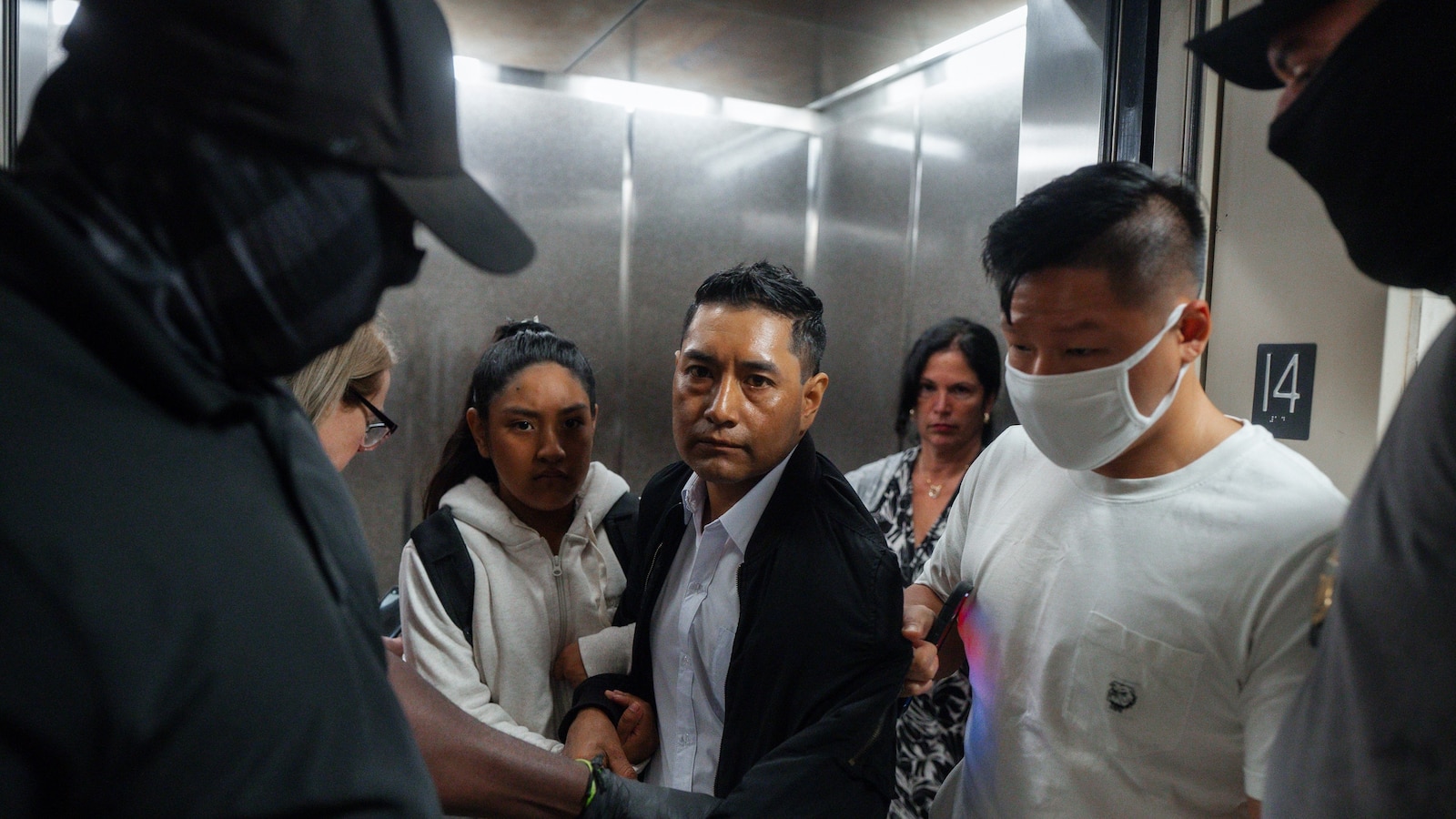
The ruling highlights the tension between executive authority and judicial oversight. By allowing arrests at immigration courts, the Trump administration sought to increase the number of deportations, often detaining individuals immediately after their cases were resolved. This practice, which became widespread, created a “chilling effect” on attendance at court hearings, as immigrants feared being taken into custody while waiting for their fate. Pitts argued that this lack of preparation left the policy vulnerable to legal challenges, as it failed to account for the psychological impact on those facing removal.
A Nation-Wide Policy Under Threat
The policy reversal began shortly after Trump took office in 2017, when the Department of Homeland Security (DHS) abandoned the long-standing tradition of releasing detainees after court sessions. Instead, agents would often wait in hallways or nearby cells to apprehend individuals, a tactic that expanded the scope of immigration enforcement. This approach was criticized for its abruptness, with legal experts noting that it disregarded the established framework of judicial review and due process.
While the New York ruling from May had limited its impact to that specific jurisdiction, Pitts’ decision now applies across the entire country, casting a wider shadow over the Trump administration’s strategy. The court’s focus on the Administrative Procedure Act, which mandates federal agencies to justify their actions, serves as a reminder of the legal standards governing executive decisions. Pitts’ emphasis on the need for “sound reasons” suggests that the policy change was not only arbitrary but also inconsistent with the law’s intent.
“When a judge sentences a defendant, the defendant is taken into custody. If an alien is ordered removed by an immigration judge, the same should happen. A district judge ordering otherwise is naked judicial activism in service of an anti-American, open borders agenda,” James Percival, the U.S. Homeland Security Department’s general counsel, wrote online, defending the administration’s stance.
Percival’s comments reflect the broader ideological clash surrounding the policy. He accused the court of overstepping its authority, arguing that the decision undermines the executive’s ability to enforce immigration laws efficiently. However, opponents of the policy, including advocates for immigrant rights, hailed the ruling as a necessary correction to a system that prioritized speed over fairness. The debate centers on whether arrests at courthouses are a legitimate enforcement tool or a tactic that coerces individuals into compliance.
Legal and Practical Implications
The ruling has immediate practical consequences for immigration courts and the individuals they serve. By barring arrests within courthouse premises, the decision forces the DHS to implement alternative methods of detention, such as using nearby facilities or coordinating with law enforcement outside of court hours. This change may reduce the pressure on immigrants to appear for hearings, potentially increasing their likelihood of attending and defending their cases.
Additionally, the 12-hour limit on holding individuals in cells after court proceedings adds another layer of complexity. Pitts specifically called out the administration for exceeding this timeframe, citing instances where detainees were kept longer than allowed. This detail reinforces the argument that the policy was not only hasty but also in violation of established legal guidelines. The judge’s focus on procedural adherence underscores the importance of transparency in immigration enforcement, a principle that has been contested during the Trump era.
For the administration, the ruling represents a setback in its efforts to streamline deportation processes. Trump’s policies often emphasized aggressive enforcement, and this decision challenges the narrative that arrests at courthouses are a necessary component of that strategy. Critics argue that the policy’s abrupt implementation disrupted the balance between swift removals and the rights of those being detained, creating confusion and inconsistency in how cases were handled.
A Legacy of Policy Reversals
The Trump administration’s reversal of the immigration court policy is part of a pattern of shifting legal strategies. By dismantling long-standing practices, the administration aimed to expand its control over the deportation process, often bypassing traditional safeguards. Pitts’ ruling, however, demonstrates that these changes are not immune to judicial scrutiny, especially when they lack clear justification.
As the legal landscape continues to evolve, the decision highlights the ongoing struggle between executive action and judicial oversight. While the administration has faced challenges in its approach to immigration enforcement, the ruling also serves as a validation of the arguments made by those who advocate for a more deliberate and equitable process. The impact of this decision may be felt for years to come, shaping the future of how immigrants are treated within the U.S. legal system.
In the wake of the ruling, the administration is expected to revisit its strategy, potentially adjusting how it enforces immigration laws in the face of legal resistance. The debate over the practice of arrests at courthouses remains unresolved, with legal scholars and advocates continuing to argue its merits and drawbacks. For now, however, the decision stands as a clear statement that the Trump-era policy lacks the foundational reasoning required by the Administrative Procedure Act, signaling a pivotal moment in the ongoing battle over immigration enforcement.
As the nation grapples with the implications of this ruling, the focus will likely shift to the balance between security and individual rights. Whether the policy change will be seen as a necessary correction or a significant overreach depends on how the courts and the public perceive the administration’s actions moving forward. For immigrants, the decision offers a measure of relief, but it also raises new questions about the effectiveness of immigration enforcement in the modern era.