
Secret Service officers exchange gunfire with armed suspect near White House, juvenile bystander injured: USSS
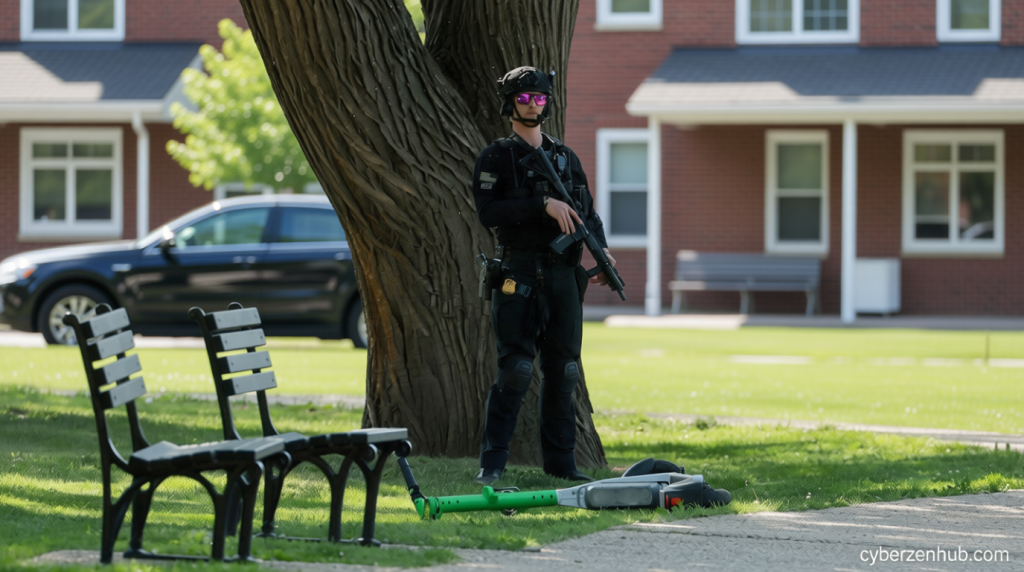
Secret Service Officers Engage in Gunfight with Armed Suspect Near White House, Juvenile Bystander Injured
Shooting Incident Occurs on Monday Amid Ongoing Security Concerns
Secret Service officers exchange gunfire – On Monday, U.S. Secret Service officers encountered a tense situation when they exchanged gunfire with an armed individual near the White House property in Washington, D.C., according to federal authorities. The incident, which unfolded around 3:30 p.m., took place outside the main complex’s perimeter, close to the National Mall. Deputy Director Matt Quinn of the Secret Service provided details during a press briefing, confirming that both the suspect and a juvenile bystander sustained injuries during the confrontation.
The event unfolded following a routine patrol, during which a plainclothes officer spotted a “suspicious individual that appeared to have a firearm,” Quinn stated. Initial observations led to a brief pursuit by uniformed police, who followed the suspect until he turned and fired at the officers. In response, the Secret Service personnel returned fire, striking the suspect, who was subsequently taken to a hospital for treatment. Quinn noted that the suspect’s condition had not yet been disclosed, leaving the outcome of the confrontation uncertain.
“Everything I’ve seen leads me to believe, and the investigators believe, he was struck by the suspect,” Quinn said during the briefing.
The juvenile bystander, identified as a male, was reportedly injured by the suspect’s gunfire. While the exact nature of the injuries remains under evaluation, Quinn confirmed that the individual was receiving medical attention. This marks the second instance of an officer-involved shooting in the capital this month, further highlighting the heightened security measures in place following recent threats to high-profile figures.
Context and Investigation into the Motive
The shooting occurred just days after an alleged assassination attempt on former President Donald Trump at the White House Correspondents’ Dinner, which had already raised concerns about potential security breaches. Quinn emphasized that the motive behind Monday’s incident is still under investigation, though he suggested it could be linked to broader security threats.
“Whether or not it was directed to the president or not, I don’t know, but we will find out,” Quinn said.
Authorities have not yet ruled out the possibility that the suspect targeted the White House directly, though no immediate threat to the president was confirmed. The incident prompted a brief evacuation of the North Lawn, where the Secret Service maintains a high level of vigilance. Quinn also noted that the suspect did not approach Vice President JD Vance’s motorcade, which passed through the area shortly before the shooting.
Use-of-Force Review and Security Implications
Following the confrontation, the Metropolitan Police Department was tasked with conducting a thorough review of the officers’ use of force. This step underscores the dual focus on both the suspect’s actions and the Secret Service’s response protocols. The investigation aims to determine whether the officers acted appropriately under the circumstances, as the incident occurred in a public space adjacent to the White House.
Quinn’s remarks highlighted the complexity of the situation, noting that the suspect had managed to evade capture before being shot. The officers’ decision to fire was based on the immediate threat posed by the suspect, who was described as appearing to have a firearm and demonstrating a willingness to use it. The juvenile bystander’s injury added an additional layer of concern, prompting calls for a more detailed analysis of the events.
While the suspect’s identity has not been fully disclosed, investigators are working to identify him and gather evidence. The timing of the incident—less than a week after Trump’s alleged assassination attempt—has drawn comparisons to past security challenges, with officials cautioning that threats against the president remain a priority. The Secret Service continues to evaluate its response strategies to ensure readiness for similar incidents in the future.
Quinn also mentioned that the suspect’s movements were closely monitored before the shooting, with officers observing him for several minutes prior to the confrontation. This period of surveillance allowed for a quick reaction when the suspect turned and fired, but it also raised questions about the effectiveness of existing detection methods. The incident has since been classified as a high-level security event, with multiple agencies collaborating to investigate its causes and consequences.
As the investigation progresses, officials have stressed the importance of maintaining public trust in the Secret Service’s ability to protect the nation’s leaders. The juvenile bystander’s injuries, though non-life-threatening, have sparked discussions about the need for additional measures to safeguard both the White House and the surrounding community. Meanwhile, the suspect’s condition at the hospital remains a focal point for law enforcement, as they await further updates on his recovery.
Broader Impact on Security Operations
Monday’s shooting has prompted a reevaluation of security procedures across the White House complex. Officials have emphasized that the incident occurred outside the primary perimeter, suggesting that the suspect may have intended to breach the area. This scenario has renewed debates about the balance between proactive security measures and the potential for civilian casualties.
Quinn’s statements during the briefing reflected the Secret Service’s commitment to transparency, as they detailed the sequence of events to the public. The officers’ swift action in returning fire was described as necessary to neutralize the immediate danger, but the incident also serves as a reminder of the risks associated with high-profile security operations. The juvenile bystander’s involvement in the shooting has added a personal dimension to the case, drawing attention to the broader implications of such events on public safety.
With the motive still under scrutiny, the Secret Service has committed to a comprehensive review of the incident, including the suspect’s background and any possible connections to previous threats. The investigation into the use of force will provide critical insights into the decision-making process of the officers involved, ensuring accountability and improving future protocols. As the case unfolds, the focus remains on understanding the full context of the shooting and its impact on national security efforts.