USDA Files Proposal to Dismantle Quarter-Century Shield Protecting 45 Million Acres of National Forest
Cyberzenhub.com – The U.S. Department of Agriculture on Tuesday deposited a proposed rule and accompanying draft environmental impact statement into the Federal Register, formally initiating the process to repeal the Roadless Area Conservation Rule. If finalized, the action would eliminate sweeping bans on new road building and commercial timber harvesting that have governed nearly 45 million acres of National Forest System lands since 2001. The move marks the most significant restructuring of federal forest policy in a generation and immediately ignited a fierce debate over wildfire management, biodiversity, and the future of America’s public lands.
What the Roadless Rule Has Done for 25 Years
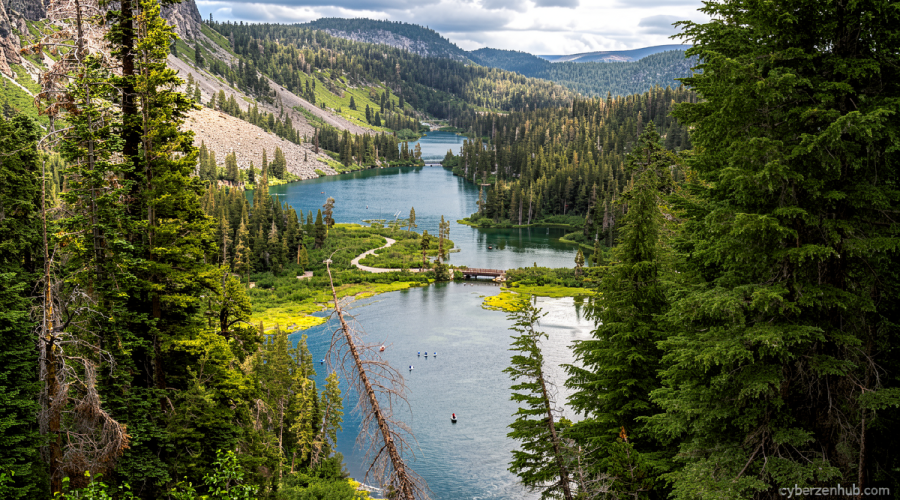
Adopted in 2001 under the Clinton administration, the Roadless Rule established a blanket prohibition on constructing new roads and conducting timber operations in inventoried roadless areas scattered across the national forest estate. These zones—found in every region of the country but concentrated in the West and in Alaska’s Tongass National Forest—were designated because they remained free of permanent road access and had retained their natural character. For two and a half decades, the rule functioned as a de facto conservation boundary, keeping industrial forestry and infrastructure development out of some of the last contiguous, road-free tracts of old-growth and mixed forest in the United States.
The administration now characterizes that protection as a “one-size-fits-all restriction” that has hampered land managers’ ability to respond to mounting wildfire threats and declining forest health. Officials argue that by locking millions of acres into a single management posture, the rule prevented targeted thinning, fuel reduction, and other interventions that could have lowered hazard levels before catastrophic fires struck.
Administration Framing: Forests as Fire Risk
Agriculture Secretary Brooke Rollins framed the proposal in urgent, almost alarmist terms in a written statement released alongside the filing.
“Our forests can’t afford another decade of inaction. Across the country, we’ve watched preventable conditions – overgrown stands, insect outbreaks and disease – turn healthy landscapes into tinderboxes.”
Rollins added that outdated restrictions had kept “tens of millions of forested acres off-limits to the very treatments that improve forest health and reduce wildfire risk to our communities.”
Forest Service Chief Tom Schultz reinforced the message, insisting that hands-on management is no longer optional.
“Active forest management is not an option. It’s essential. More than 40% of inventoried roadless areas, primarily in the West, have high or very high wildfire hazard potential. And only 5% of those areas have received hazardous fuels reduction treatments since 2014.”
Administration spokespeople emphasized that the repeal would not automatically greenlight any specific road or logging project. Instead, it would transfer greater discretionary authority to local forest supervisors, who could weigh site-specific conditions—fuel loads, species composition, proximity to communities—when deciding whether to open an area to development or keep it closed.
Environmental Groups Sound the Alarm
Critics moved swiftly to push back. Within hours of the Federal Register filing, conservation organizations issued statements warning that eliminating the rule’s protections would expose irreplaceable ecosystems to commercial exploitation and fragmentation.
Alex Craven, Forest Campaign manager at the Sierra Club, called the Roadless Rule “the only thing preventing much of our wildest remaining national forests from industrial development.” He stressed that these forests supply critical wildlife habitat, filter drinking water for millions of residents, and harbor vast stretches of the country’s last old-growth stands.
“These forests offer critical habitat for wildlife; provide clean, fresh air and water for millions; and contain vast swaths of the last remaining old-growth forests in the country.”
David Dreher, senior manager for public lands policy at the National Wildlife Federation, broadened the argument to include cultural and economic dimensions. He noted that roadless forests sustain hunting, fishing, and backcountry recreation that anchor rural economies, and that they hold sites of deep spiritual significance to Indigenous communities.
“Roadless forests provide some of the nation’s most intact habitat, help maintain clean and reliable water supplies, and include places of deep cultural importance to Indigenous communities. These landscapes also sustain hunting, fishing, and other outdoor recreation that contributes to local economies.”
Michael Burger, Executive Director of Columbia University’s Sabin Center for Climate Change Law, pointed to the rule’s geographic reach—particularly its coverage of enormous tracts within the Tongass National Forest in Alaska—and warned that subjecting those areas to new roads and commercial forestry would constitute “a loss for the American people, and another blow by this administration to the global climate.”
New Scientific Analysis Questions the Premise
A peer-reviewed policy analysis published in the journal Biological Conservation, authored by ecologists and forest-management specialists, examined both local and landscape-scale consequences of repealing the Roadless Rule. The authors concluded that the administration’s stated justifications would, in practice, “degrade these forest ecosystem functions, increase fire risk, and is grossly uneconomic.” The study argued that the proposed rescission “endangers irreplaceable intact forest landscapes in the US” and that those landscapes form part of a global network of intact forests essential to regional and planetary ecological health.
The finding cuts against the administration’s central narrative: that removing the rule would lower wildfire danger. The analysis suggests the opposite—that opening roadless areas to logging and road construction would fragment canopy cover, increase edge effects, and ultimately elevate fire probability rather than reduce it.
What Happens Next
The proposed rule now enters a public comment period, after which the USDA must respond to submissions before issuing a final rule. The draft environmental impact statement will be reviewed by the Council on Environmental Quality, and affected states, tribal governments, and federal agencies will have opportunities to weigh in. Depending on the scope of objections and the strength of the scientific record, the process could take months or stretch into years.
For the communities that depend on national forests for water, recreation, and cultural continuity, the stakes are immediate. Whether the roadless areas remain closed or open to commercial development will shape the character of Western landscapes—and the resilience of the ecosystems that buffer towns against wildfire—for decades to come.
Related Reading
Frequently Asked Questions
What is Trump admin moves to allow logging?
Trump admin moves to allow logging is the main topic of this guide. The article explains the context, practical details, and next steps readers should understand.
Why does Trump admin moves to allow logging matter?
Trump admin moves to allow logging matters because readers are looking for a useful answer, not just a short summary. Good content should match search intent and help them decide what to do next.