
Trump announces 25% tariff on cars, trucks from EU
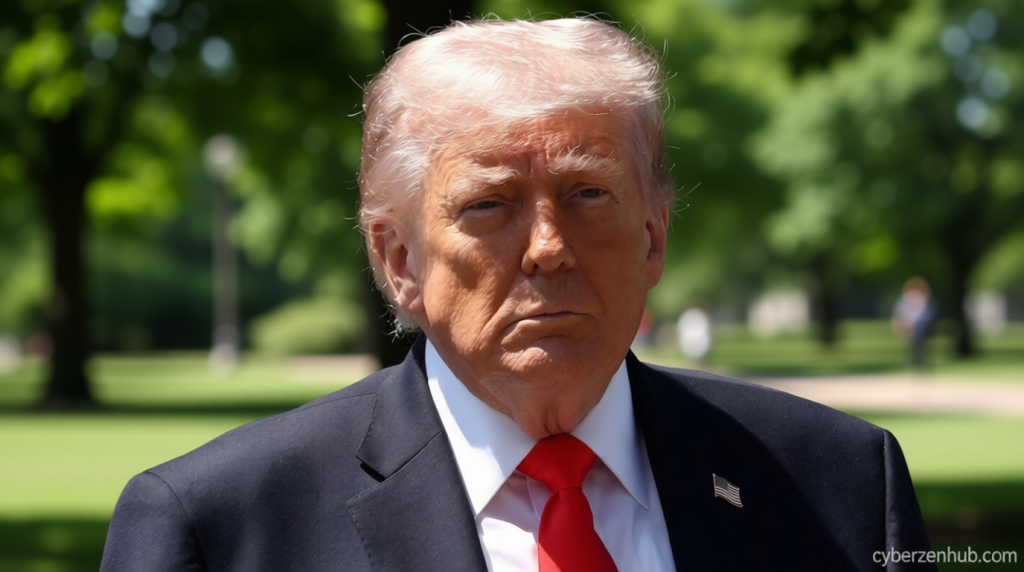
Trump Announces 25% Tariff on Cars, Trucks from EU
White House Statement on EU Automotive Tariffs
Trump announces 25 tariff on cars – President Donald Trump made a bold move on Friday by confirming plans to implement a 25% tariff on European Union vehicles, including cars and trucks, effective next week. This decision follows his assertion that the EU has not upheld the terms of their trade agreement, a claim he emphasized in a social media post. The announcement came as part of a broader effort to address what Trump described as a pattern of non-compliance by the European Union. “As usual, they were not adhering to the agreement that we have,” he stated during his departure from the White House, underscoring the tension between the two trade partners.
“Based on the fact the European Union is not complying with our fully agreed to Trade Deal, next week I will be increasing Tariffs charged to the European Union for Cars and Trucks coming into the United States. The Tariff will be increased to 25%,”
Trump wrote in a statement shared across his social media platforms. The president’s reasoning centers on the belief that the EU’s failure to meet their obligations under the trade pact has created an unfair advantage for European manufacturers. While the White House did not specify the exact legal basis for the tariff hike, officials are likely drawing on Section 232 of the Trade Expansion Act, which grants the president authority to adjust import levels based on national security concerns. This provision has been a key tool in recent trade disputes, allowing Trump to justify tariffs without requiring immediate congressional approval.
Section 232 empowers the administration to assess whether imported goods pose a threat to U.S. economic stability or security. According to Trump’s post, the EU’s actions have been deemed a violation of this agreement, prompting the decision to raise tariffs. The president has previously used this clause to target steel and aluminum imports, and now it appears to be extended to the automotive sector. While the EU’s non-compliance was not elaborated in detail, it is understood to relate to issues such as steel production quotas or the dumping of vehicles at lower prices, which have been points of contention in recent months.
Trump’s announcement coincided with his departure from the White House on May 1, 2026, as captured by Reuters photographer Kevin Lamarque. During his remarks, the president reiterated his stance on the matter, stating, “they were not adhering to the agreement that we have.” This sentiment aligns with his long-standing approach to trade relations, where he frequently accuses foreign partners of undermining U.S. interests. The 25% tariff, set to take effect next week, is expected to significantly impact EU car and truck exports to the United States, potentially raising costs for consumers and businesses alike.
In addition to the tariff increase, Trump highlighted the United States’ growing automotive industry in his post, emphasizing that American manufacturing plants are set to open soon. “Over 100 billion dollars is being invested in these facilities, which marks a record in the history of car and truck manufacturing,” he claimed. This investment, he argued, would mitigate the effects of the EU’s non-compliance by bolstering domestic production. However, the source of the funding for these projects was not explicitly stated, leaving room for speculation about whether the funds come from public or private sectors.
The administration’s decision to invoke Section 232 has drawn mixed reactions. Some analysts suggest that the tariff could serve as a strategic move to pressure the EU into renegotiating trade terms, while others question its effectiveness in addressing the root causes of the disagreement. The White House has since reached out to the executive branch for additional comments on the tariff authority, indicating that the announcement is part of an ongoing dialogue rather than a final resolution.
Trump’s comments also touch on the broader implications of the tariff for global trade dynamics. By increasing the cost of imported vehicles, he aims to protect American jobs and industries, a recurring theme in his economic policy. The 25% rate is notably higher than the previous 20% imposed earlier in the year, signaling a more aggressive stance in the trade war. This move has been welcomed by some domestic manufacturers, who see it as a necessary step to counter EU competition. However, critics argue that the tariff could lead to retaliatory measures from the EU, potentially escalating the trade conflict further.
Further details on the tariff’s implementation, including the specific goods affected and the timeline for enforcement, are yet to be fully disclosed. The president’s social media post, however, outlines the core rationale: the EU’s alleged failure to meet their obligations under the trade agreement. This has been a central argument in previous trade negotiations, with Trump frequently pointing to the EU’s “bad faith” as a justification for additional tariffs. The 25% rate is projected to apply to all EU-made vehicles entering the U.S., with exemptions for those produced domestically.
The announcement has sparked renewed debate about the balance between protecting American industry and maintaining international trade partnerships. While the EU has been a key player in the U.S. market, the new tariff could disrupt supply chains and increase prices for consumers. The White House has yet to release a detailed analysis of the expected economic impact, but industry experts suggest that the measure is intended to create leverage in future talks. As the tariff takes effect, the administration will likely monitor its effects closely, ready to adjust strategies as needed.
Meanwhile, the president’s focus on U.S. manufacturing has been a cornerstone of his trade policy. By touting the 100 billion dollar investment in domestic plants, he aims to reassure the public that the move is not only about protecting jobs but also about fostering long-term growth. This argument is a common refrain in his rhetoric, designed to rally support for the tariff as a win for American workers and businesses. The White House has not provided specific details on the projects receiving this investment, but the claim of record-breaking spending underscores the administration’s commitment to revitalizing the automotive sector.
As the deadline for the tariff increase approaches, the situation remains fluid. The EU has already signaled its intention to respond with countermeasures, and the broader implications for the global economy are still being analyzed. For now, the 25% rate stands as a clear statement of Trump’s resolve to enforce trade agreements through economic pressure. This decision is part of a larger narrative of protecting American interests in international markets, with the automotive sector serving as a focal point in the ongoing trade war.
This is a developing story. Please check back for updates on the tariff’s impact and any new developments in U.S.-EU trade relations.