
Hegseth again looks to punish Democratic Sen. Mark Kelly over military comments
Hegseth Again Seeks to Penalize Democratic Senator Mark Kelly for Military Remarks
Hegseth again looks to punish Democratic – Defense Secretary Pete Hegseth has once again targeted Democratic Senator Mark Kelly, a retired Navy captain, by initiating a Pentagon review to determine if the Arizona senator improperly revealed classified information. The inquiry follows Kelly’s recent comments on CBS’ “Face the Nation” about the rapid depletion of key munitions, such as Tomahawk and ATACMS missiles, amid the ongoing conflict with Iran. Hegseth, in a social media post Sunday evening, accused Kelly of “sharing classified information on television” and questioned whether the senator had breached his oath to the nation once more. The Pentagon’s legal team is now tasked with assessing the validity of the claim.
A Pattern of Reprisal
This marks the second time Hegseth has attempted to penalize Kelly for his military-related statements. Previously, the defense secretary pushed to demote the senator after he and other Democratic veterans released a video advising U.S. troops not to obey orders deemed illegal. That incident threatened to reduce Kelly’s military pension, sparking controversy among lawmakers and legal experts. Now, the latest focus is on his remarks about Iran’s impact on stockpiles, which Hegseth claims involved a classified briefing.
Kelly’s recent appearance on “Face the Nation” highlighted concerns about the war’s toll on Pentagon resources. He argued that open-door briefings to Congress had exposed the extent of ammunition use, stating that the U.S. had already consumed half its inventory in the conflict. According to Kelly, this level of depletion could take up to four years to reverse, emphasizing the long-term consequences for national defense readiness. His remarks were met with swift criticism from Hegseth, who insisted that the information shared was not public and should have remained confidential.
Legal and Political Tensions
“It’s shocking how deep we’ve gone into these magazines,” Kelly said during the CBS interview.
Kelly’s response to Hegseth’s accusation came quickly. On social media, he shared a clip from a Senate Armed Services Committee hearing where Hegseth himself admitted it would take years to replenish pre-war weapon stockpiles. Kelly framed the exchange as evidence that the information was not classified, but rather a direct quote from the secretary. “That’s not classified, it’s a quote from you,” he wrote, challenging Hegseth’s claim of secrecy.
The Pentagon has faced mounting pressure to justify its munitions usage amid the Iran war. Acting Comptroller Jules Hurst III testified in late April that the conflict had already cost $25 billion, with significant portions allocated to weapons and drone systems. While the department has struck 13,000 targets, it acknowledges that some may require multiple hits, exacerbating the strain on reserves. Hegseth, however, remains steadfast in his assertion that the U.S. possesses sufficient firepower to sustain operations.
The legal battle over Kelly’s comments has drawn attention from judicial bodies. A three-judge panel in the U.S. Court of Appeals recently expressed doubts about Hegseth’s attempt to penalize the senator, suggesting the Pentagon may have overstepped by targeting Kelly’s First Amendment rights. The panel’s skepticism highlights a growing debate about the balance between national security and free speech, particularly in cases involving military veterans and their public critiques of defense policies.
Broader Implications for Defense Strategy
Kelly’s concerns extend beyond immediate war costs. During the CBS interview, he warned that the depletion of stockpiles could compromise the U.S. ability to respond to other conflicts, such as those with China or Russia. “Whether it’s a conflict with China or somewhere else in the world, the munitions are depleted,” he stated, underscoring the urgency of replenishing supplies. This argument aligns with findings from the Center for Strategic and International Studies, which noted that the war with Iran has accelerated the use of critical weapons, potentially leaving the military unprepared for future engagements.
The Pentagon’s current defense budget, which includes a historic $1.5 trillion allocation for the next fiscal year, was finalized before the Iran war escalated. Despite this, the conflict has intensified debates over whether the budget adequately addresses the surge in munitions demand. The proposed increase of 50% over current spending levels is intended to bolster production capabilities, but Kelly argues that the war has exposed gaps in planning and resource allocation. “The strain on stockpiles is a direct result of decisions made long before the war began,” he remarked, pointing to the need for more transparent budgeting processes.
Public and Private Briefings: A Point of Contention
Kelly’s comments raise questions about the distinction between public and private Pentagon briefings. While classified materials are typically discussed in closed-door sessions, the senator claims that the information shared during his interview was already disclosed in public briefings. This discrepancy has fueled arguments about the clarity of classification standards and the potential for overreach by officials like Hegseth. “The data was made available to Congress, so it’s not a secret anymore,” Kelly asserted, suggesting that the Pentagon’s legal actions against him are politically motivated.
Hegseth’s campaign to penalize Kelly reflects a broader strategy of using military authority to address political criticism. By framing the senator’s remarks as a breach of duty, Hegseth aims to reinforce his stance on strict adherence to secrecy protocols. However, critics argue that this approach risks undermining the open dialogue necessary for informed policymaking. The senator’s ability to share insights from classified briefings, they contend, is a vital check on executive power and defense decision-making.
Public Perception and Congressional Dynamics
The incident has intensified scrutiny of Hegseth’s leadership within the Pentagon. Senators and analysts have questioned whether his focus on Kelly is a distraction from larger issues, such as the war’s financial impact and the effectiveness of defense procurement. Meanwhile, Kelly’s allies in the Senate have used the controversy to highlight the tension between military commanders and civilian oversight, arguing that Hegseth’s actions reflect a preference for punitive measures over constructive criticism.
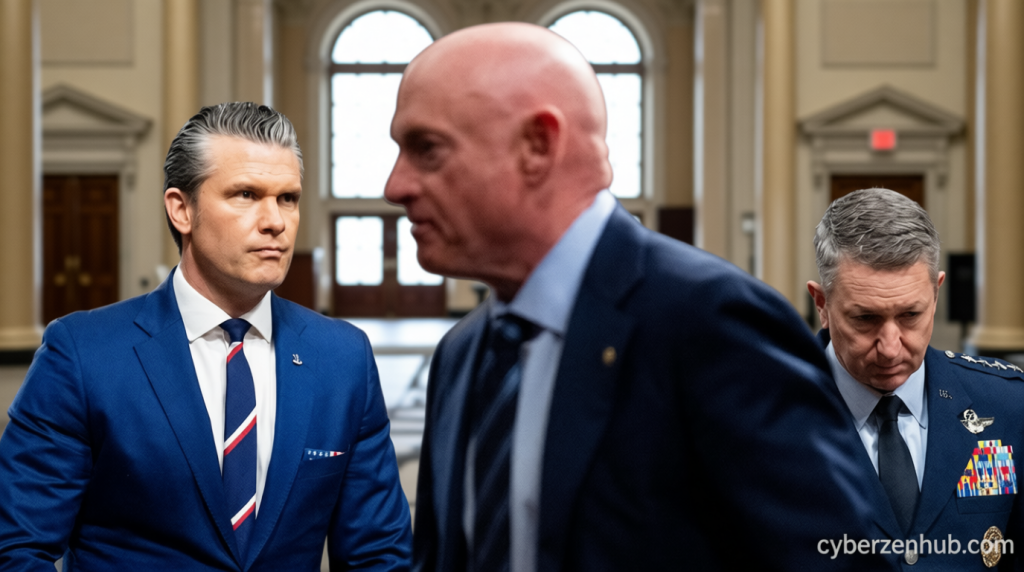
Bill Clark/CQ-Roll Call via Getty Images captured a moment of Kelly walking past Hegseth and Joint Chiefs Chairman Dan Caine during a Senate Armed Services Committee hearing. The image symbolizes the growing friction between the two figures, with Kelly representing the voices of military veterans who challenge Pentagon policies. As the war with Iran continues, the debate over stockpile management and transparency will likely remain a focal point of congressional discourse, shaping the future of U.S. defense strategy and the role of military leaders in political affairs.
In a recent statement, Kelly reiterated his belief that the Pentagon’s current approach to munitions use is unsustainable. “The strain on our inventory is a clear sign that we need to rethink how we allocate resources,” he said, calling for a more proactive strategy to address potential shortages. This sentiment resonates with many in the Senate who argue that the Iran war has exposed vulnerabilities in the U.S. military’s preparedness, particularly in an era of multiple global threats.
Hegseth’s response to Kelly’s critique remains focused on accountability. The defense secretary has emphasized the importance of safeguarding classified information, stating that leaks could compromise national security. However, as the Pentagon’s budget and operations come under increased scrutiny, the line between necessary secrecy and political retaliation continues to blur. The outcome of this review may set a precedent for how military officials are held accountable for their public statements, with implications for both the Senate and the broader defense community.