
Democrats vow to fight $1 billion Senate security proposal for White House ballroom
Democrats Vow to Resist $1 Billion Senate Security Measure for Trump’s Ballroom
Democrats vow to fight 1 billion – Senate Republicans, who returned to Washington on Monday, are now under scrutiny for a $1 billion security initiative that could finance President Donald Trump’s White House ballroom. Democrats have signaled their intent to challenge the measure, which was inserted into a broader spending bill designed to revive funding for immigration enforcement agencies. Since February, the Democratic majority in the Senate has blocked similar financial allocations, creating tension over the use of taxpayer dollars for this controversial project.
Partisan Push and Unanimous Support
The security funding, added by Senate Republicans, aims to bolster the U.S. Secret Service’s capabilities, particularly for the White House ballroom. This follows a high-profile attack last month when a man was charged with attempting to assassinate Trump during the White House Correspondents’ Association dinner. The proposal, however, has sparked debate over its alignment with national priorities. While most GOP lawmakers have remained silent, some have voiced concerns about its necessity.
Rep. Rob Wittman, a Virginia Republican, expressed hesitation, stating he would “look at it very carefully and make sure those things are in the national interest.” He emphasized the need for transparency, saying, “I want to know the exact nature of the expenditures that would go there for security. So I think it’s a little premature to look at that and say, you know, yes or no to it.” Similarly, Rep. Mike Haridopolos, R-Fla., called for more details, acknowledging the “volatile times” and the importance of securing safe spaces for officials and guests.
Democratic Resistance and Legislative Maneuvers
Senate Democratic leader Chuck Schumer has outlined a strategy to block the measure. In a letter to colleagues on Monday, he warned of a “deficit-busting, party-line bill” that would divert billions to the Secret Service while neglecting critical issues like the Iran conflict and the economic struggles of working families. Schumer’s approach includes pressuring the Senate parliamentarian to remove the ballroom funding and introducing amendments to force a vote on the proposal.
“The Republican-controlled Congress is preparing to answer this moment with a deficit-busting, party-line bill that pours billions more taxpayer dollars into a rogue ICE operation and a billion-dollar ballroom, while doing nothing to end the illegal war in Iran or ease the Republican affordability crisis bearing down on working families,” Schumer wrote. His argument hinges on the claim that the spending bill lacks bipartisan support and prioritizes Trump’s personal interests over broader legislative goals.
Ballroom Construction and Security Claims
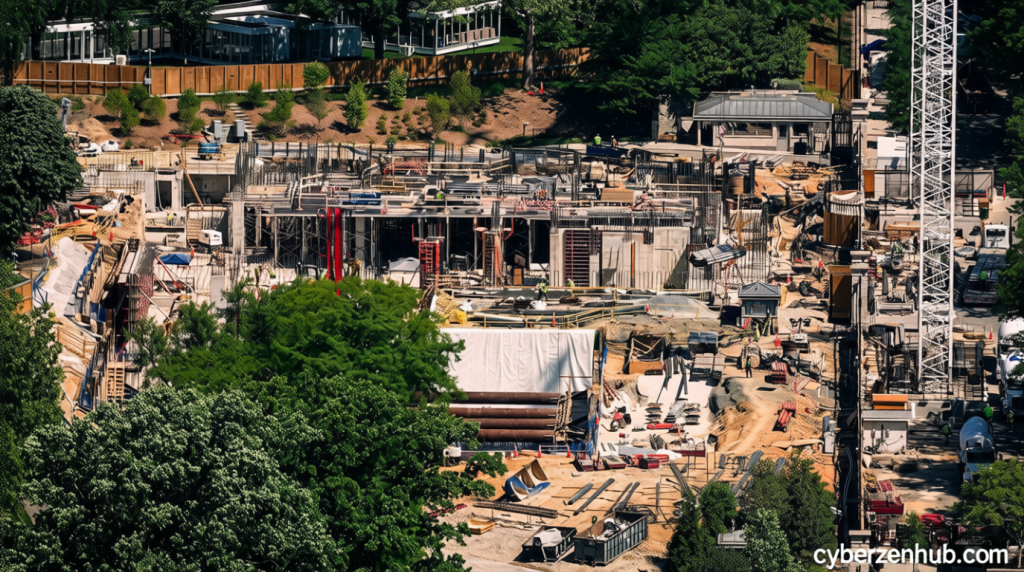
The Senate bill allocates funds for “security adjustments and upgrades” tied to the ballroom project, which Trump and other Republicans have championed since the April 25 incident at the Washington Hilton. During that event, Cole Tomas Allen was charged with storming the media dinner with weapons. The legislation specifies that the money may not be used for non-security aspects, such as interior design or amenities. However, it remains unclear whether the project’s security features will cover all costs.
Trump has described the ballroom’s construction as a $400 million private investment, though he has not yet disclosed the exact cost of security upgrades. The White House has argued that the East Wing project, which includes the ballroom, will be “heavily fortified” with bomb shelters, military installations, and a medical facility beneath the structure. Trump has also mentioned the inclusion of bulletproof glass and defenses against drone attacks, though these claims have not been independently verified.
White House Justification and Legal Challenges
White House spokesperson Davis Ingle recently praised the inclusion of the security funding, calling it “long overdue” and highlighting its role in equipping the Secret Service for “critical missions.” The administration has emphasized the need for enhanced protection following the recent threats against the president. However, the National Trust for Historic Preservation has taken legal action to halt construction, citing concerns over the project’s impact on historical preservation.
A federal appeals court recently allowed the project to proceed temporarily, but the lawsuit has kept the issue in the spotlight. Critics argue that the funding could be better allocated to other pressing needs, such as infrastructure or healthcare. Meanwhile, the House has not yet released its version of the spending bill, leaving the Senate to potentially lead the debate this week.
Political Dynamics and Uncertain Outcomes
Despite the Senate’s expected vote, the measure’s survival is not guaranteed. While Republicans have largely supported the funding, some lawmakers are questioning whether it will receive unanimous backing. The party’s reliance on a partisan budget maneuver to push the legislation through without Democratic votes has drawn criticism, with Democrats accusing the GOP of using procedural tactics to bypass opposition.
“If Republican and Democratic members can take a step back and say this is a real security issue, then maybe it will get done. But if Democrats dig in, it’ll be really challenging to pass that, as you can only imagine,” Haridopolos remarked. His comments reflect a growing divide between the parties, as Democrats seek to tie the security funding to broader fiscal responsibility while Republicans focus on immediate threat mitigation.
Broader Implications and Legislative Timeline
The debate over the $1 billion measure underscores the polarized climate in Congress. With the Senate poised to vote this week, the outcome could set a precedent for how partisan priorities influence spending decisions. Meanwhile, the House’s delayed action suggests that the legislative process may take additional time, potentially prolonging the standoff between the two parties.
As the proposal moves forward, its success will depend on whether Republicans can maintain their unity and convince enough members to support the funding. Democrats, however, remain determined to challenge the allocation, arguing that it represents a misstep in fiscal policy and a symbol of political favoritism. The ballroom’s fate now rests on the Senate’s ability to navigate this contentious legislation amid growing public scrutiny.
With the White House asserting that the project is essential for safety, the political battle over the $1 billion security measure continues to unfold. The coming weeks will determine whether this funding becomes law, or if Democrats can rally enough support to prevent it. As the Senate prepares to act, the question remains: is this a necessary investment in security, or a partisan gamble to fund a presidential amenity?