
Lawsuit seeks to stop repainting of Lincoln Memorial Reflecting Pool
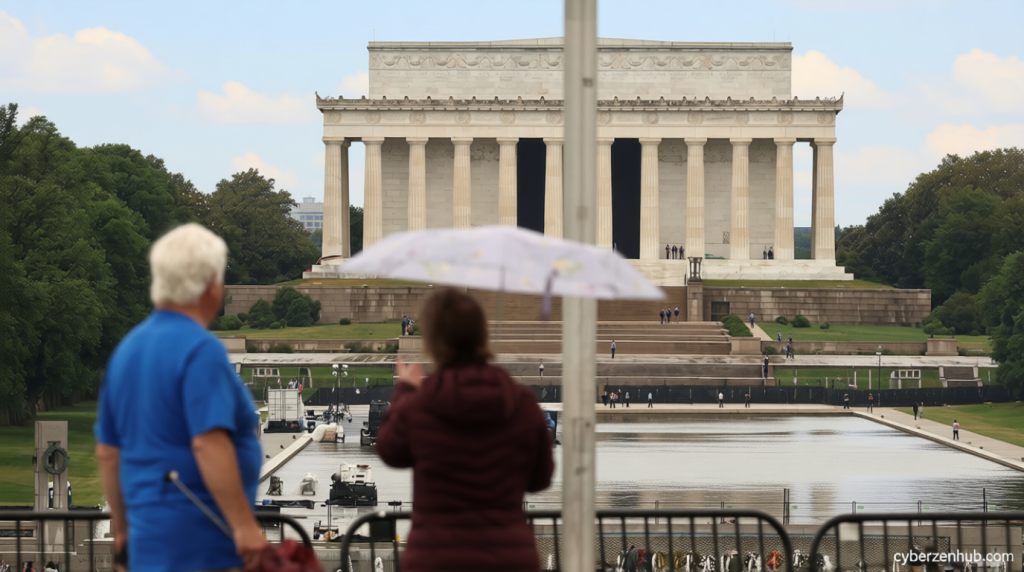
Lawsuit Aims to Halt Trump Administration’s Repainting of Lincoln Memorial Reflecting Pool
Lawsuit seeks to stop repainting of Lincoln – The Trump administration is now under legal scrutiny after a nonprofit organization filed a lawsuit to block its ongoing efforts to repaint the Lincoln Memorial Reflecting Pool. The suit, submitted to a D.C. federal court on Monday, asserts that the project “willfully disregards legal limits established by Congress,” challenging the decision to alter the historic site without congressional approval. At the heart of the dispute is the claim that the renovation violates Section 106 of the National Historic Preservation Act, which mandates federal agencies to evaluate the impact of their projects on historically significant properties. The Cultural Landscape Foundation, a D.C.-based advocacy group, is spearheading the legal action, arguing that the changes to the reflecting pool, part of broader beautification initiatives, undermine its cultural and architectural integrity.
Legal Basis for the Challenge
The lawsuit emphasizes that the Lincoln Memorial Reflecting Pool and its surrounding landscape are designated as a historic site under the National Register of Historic Places, specifically within the National Mall Historic District. This classification, the foundation contends, means the Trump administration should have sought formal authorization from Congress before proceeding with the resurfacing work. According to the complaint, the project represents a pattern of intentional oversight, with the administration allegedly rushing through changes to iconic landmarks without due process. The legal team argues that the pool’s transformation from its original appearance to the “American Flag Blue” hue is a fundamental shift in its historic character, one that warrants a judicial review.
Section 106 of the National Historic Preservation Act, which the lawsuit references, requires federal agencies to consult with the Advisory Council on Historic Preservation before approving projects that could affect registered historic sites. The foundation claims this process was bypassed, with the administration relying on internal approval rather than seeking congressional validation. “Every day that the resurfacing continues, the historic character of the Reflecting Pool is being further and fundamentally altered,” the legal filing states, framing the project as a significant departure from established preservation standards. The lawsuit also highlights the Trump administration’s broader efforts to modernize Washington, D.C., including the restoration of the White House East Wing and the construction of a proposed triumphal arch near Arlington National Cemetery, all of which are under similar scrutiny.
Broader Implications of Trump’s D.C. Projects
The repainting of the Lincoln Memorial Reflecting Pool is part of a larger initiative by the Trump administration to enhance the visual appeal of the nation’s capital. This includes the renovation of the White House East Wing, which was stripped of its original design elements and replaced with a more streamlined, modern aesthetic. Additionally, the administration has proposed a grand arch near Arlington National Cemetery, a structure intended to symbolize American military triumphs and national pride. Critics argue that these projects, while aimed at improving public spaces, risk eroding the historical authenticity of landmarks that have long been cherished as symbols of American heritage.
The foundation’s lawsuit draws direct comparisons to the East Wing’s demolition, which sparked widespread controversy. The East Wing, a landmark of the 20th-century American architecture, was partially razed to make way for a new building, a decision that many saw as an overreach. The reflecting pool, however, is being altered in a different manner—through color change and resurfacing—yet the foundation maintains that both actions reflect a shared disregard for historical preservation laws. “This latest desecration of the reflecting pool is part of a pattern—epitomized most notably by the rush to destroy the East Wing of the White House—in which this Administration willfully disregards legal limits established by Congress,” the suit states. The legal argument hinges on the assertion that the administration’s approach prioritizes speed and political symbolism over compliance with federal regulations.
Background of the Cultural Landscape Foundation
The Cultural Landscape Foundation is a D.C.-based nonprofit dedicated to preserving and promoting cultural landscapes across the United States. With a focus on architecture, urban design, and environmental history, the organization advocates for the protection of spaces that hold historical or cultural value. Its efforts to challenge the reflecting pool project underscore its commitment to maintaining the authenticity of iconic sites. The foundation’s legal team has highlighted the pool’s significance as a historic element of the National Mall, noting that its current design has been a focal point of the Lincoln Memorial since the 1920s.
Workers have been resurfacing the Lincoln Memorial Reflecting Pool with a blue hue, a process that has drawn attention from both supporters and detractors. The paint, described as “American Flag Blue,” was chosen to align with the color of the U.S. flag, a decision that has been met with mixed reactions. While some view it as a patriotic touch, others see it as an attempt to modernize the site in a way that prioritizes political messaging over historical accuracy. The project, which began in May 2026, has been ongoing for several weeks, with no official announcement of its completion. The lawsuit’s filing adds urgency to the debate, as the administration moves forward with the changes despite the legal challenge.
Administration’s Defense of the Renovations
In response to the lawsuit, a spokesperson for the Department of the Interior defended the decision to repaint the pool, stating that the action was necessary to restore its original appearance. “President Trump has done more to make our nation’s capital a shining beacon than any other president in the history of this country,” the statement claimed. The spokesperson added that the National Park Service selected the most qualified company to expedite the repair of the Reflecting Pool ahead of the 250th anniversary of the nation’s capital, a milestone expected to be celebrated in 2027. “The work being done today ensures that this landmark will remain a source of inspiration for generations to come,” the statement asserted.
Despite the defense, the administration’s position does not explicitly address whether it sought congressional approval for the project. The statement emphasizes the pool’s restoration as a civic achievement, but it leaves open the question of whether the legal requirements under Section 106 were fully met. The lawsuit, however, argues that this omission is deliberate, with the administration’s actions reflecting a broader trend of bypassing established preservation protocols. As the case progresses, it may set a precedent for future projects involving historic sites in Washington, D.C., and beyond. The outcome could determine whether the Trump administration’s approach to urban renewal aligns with congressional mandates or continues to face legal hurdles.
Public Reaction and Ongoing Debate
The repainting of the Lincoln Memorial Reflecting Pool has sparked a wave of public discourse, with social media platforms and local news outlets highlighting the controversy. Some citizens support the initiative, viewing it as a necessary update to a space that has seen decades of wear and tear. Others, however, see the color change as a symbolic act that erases the pool’s historical identity. The lawsuit adds another layer to this debate, positioning the project as a test case for the balance between modernization and historical preservation. As the legal battle unfolds, the future of the Reflecting Pool—and its place in the National Mall Historic District—remains uncertain.
Meanwhile, the National Park Service continues its work on the pool, with officials stating that the resurfacing is a critical step in maintaining the memorial’s prominence. The filtration system installed alongside the painting is intended to improve water quality and extend the pool’s lifespan, addressing long-standing maintenance issues. Yet, the addition of the new color has raised questions about the administration’s priorities. Whether the pool will ultimately be restored to its original state or become a permanent symbol of Trump’s era remains to be seen. The lawsuit, however, ensures that the issue will be debated in a formal legal setting, with the potential to influence how future projects are evaluated against historical preservation standards.
As the Trump administration moves forward with its plans, the Cultural Landscape Foundation and its allies hope the lawsuit will halt the work until Congress reviews the matter. The case underscores the tension between political agendas and the preservation of historical landmarks, a debate that has played out across multiple projects in the nation’s capital. The outcome may not only affect the Lincoln Memorial Reflecting Pool but also shape the approach to cultural heritage in the years to come. For now, the pool’s blue surface stands as a testament to both the administration’s vision and the ongoing legal challenge to its implementation.