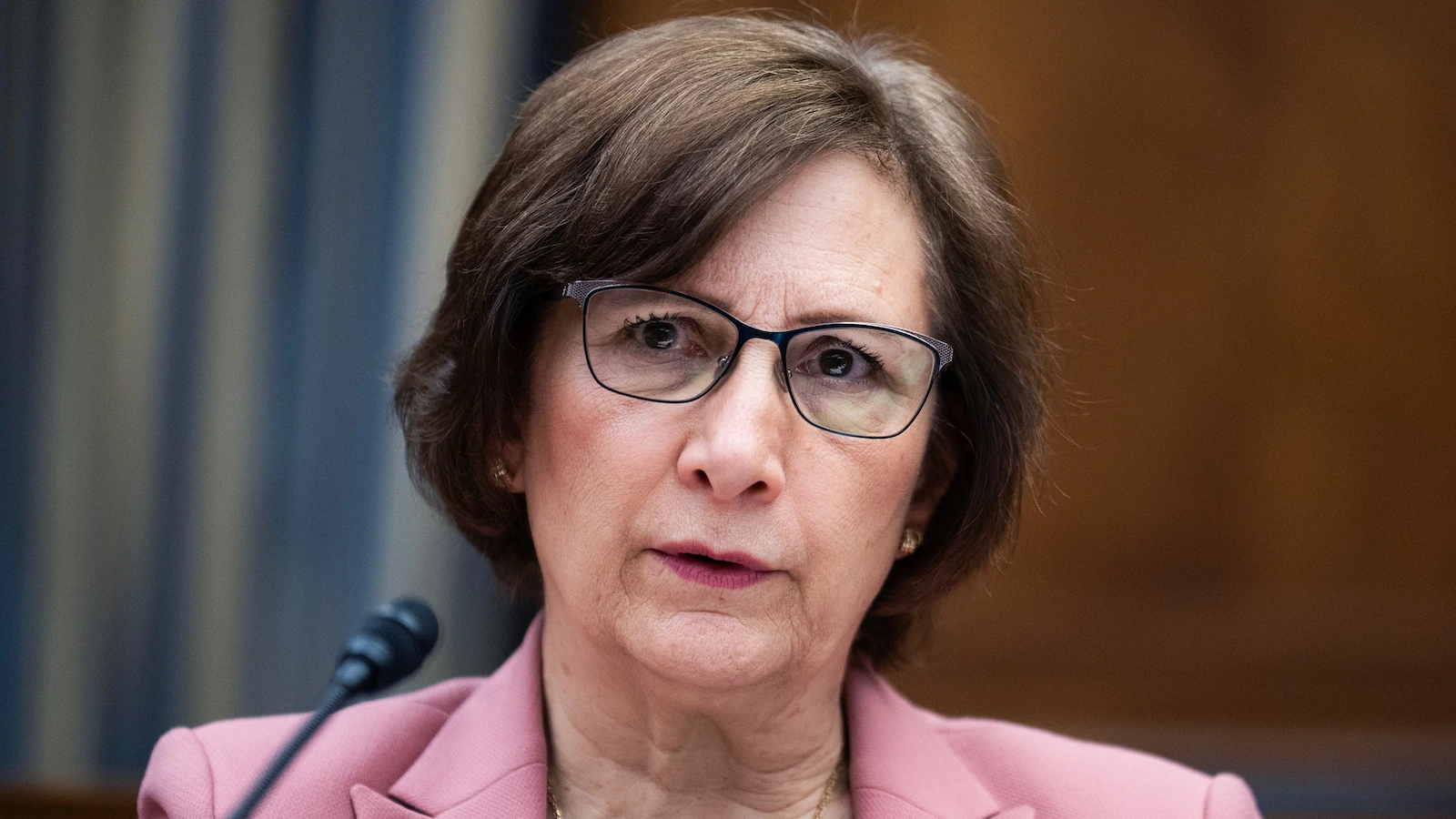
House Democrats Initiate Impeachment Probe Against Education Secretary Linda McMahon
Cyberzenhub.com – On Thursday, Rep. Suzanne Bonamici, a Democrat from Oregon, unveiled the first formal impeachment inquiry targeting Education Secretary Linda McMahon. The resolution accuses the official of overreaching authority by attempting to dismantle the Department of Education through its transfer of key functions to partner agencies. Bonamici’s move marks a significant escalation in Democratic efforts to hold McMahon accountable for what they describe as a systematic disregard for legislative intent and public trust.
Impeachment Resolution Targets Systemic Violations of Congressional Authority
Bonamici’s resolution argues that McMahon’s actions have violated the core principles of federal governance. During a House floor speech, the representative condemned the secretary for “illegal transfers” of critical programs, such as those overseeing special education and civil rights, to the Health and Human Services Department (HHS) and the Department of Justice (DOJ), respectively. “You can’t just unilaterally move a program that Congress put at the Department of Education and put it somewhere else,” Bonamici asserted to ABC News, emphasizing the legal and institutional consequences of such unilateral decisions.
“It’s completely out of bounds,” Bonamici stated, reflecting the growing frustration among her colleagues over the Trump administration’s approach to education reform. The Democrat highlighted that these transfers were not merely administrative shifts but a deliberate strategy to weaken the Department of Education’s independence. “This is not what an interagency agreement is for,” she added, criticizing the use of partnerships to erode the agency’s role in shaping educational policy.
The resolution also accuses McMahon of “willful and systemic refusal to comply with the law,” alleging that she has misled Congress through false statements. Bonamici’s focus on these claims underscores a broader Democratic critique of the administration’s efforts to streamline federal operations at the expense of institutional accountability. The impeachment process, however, faces significant hurdles as Democrats hold a minority position in the House, requiring a majority vote to proceed and a two-thirds majority in the Senate for conviction.
Republican Support and Political Context
Republican leaders, including Education Committee Chairman Tim Walberg, have remained steadfast in their defense of McMahon’s policies. Walberg, a vocal supporter of the Trump administration’s educational initiatives, has argued that the transfers are necessary to improve efficiency and align with the administration’s goal of reducing federal bureaucracy. Bonamici’s resolution, however, is seen by some as a symbolic gesture rather than a practical step toward removal.
The impeachment effort is part of a larger pattern of Democratic criticisms directed at Trump appointees. While the focus on McMahon is specific, it reflects a broader strategy to challenge officials perceived as undermining key federal programs. Bonamici’s resolve, though, is rooted in personal convictions. “I came to Congress over a decade ago to protect public education,” she told ABC News, noting her current advocacy for parents and students affected by the department’s recent actions.
“From the stories I’m hearing in the community, especially from disability rights groups, I could not stand by,” Bonamici explained. “I’m just not going to sit by and stay silent when it’s being dismantled and really harmed.” Her comments highlight the grassroots concerns fueling the impeachment drive, with many arguing that the transfers have endangered vulnerable populations and weakened the Department’s ability to enforce educational standards.
In a response to Bonamici’s announcement, McMahon dismissed the allegations, writing on X: “To the Democrats in Congress: do better.” The Education Secretary pointed to a litany of failures in the current system, including “historic low test scores,” a botched FAFSA form rollout, and classrooms closed during the pandemic. She also criticized the administration for “designating parents as terrorists” and allowing “males in female locker rooms,” framing these as evidence of a broader crisis in education policy.
Key Moves in the Trump Administration’s Dismantling of the Department of Education
McMahon’s actions are part of a larger effort by the Trump administration to restructure the Department of Education. Recently, the agency announced a major initiative to shift special education services and civil rights oversight to HHS and DOJ. Department officials claim that these transfers are within their legal authority, citing the flexibility of interagency agreements to streamline operations. They argue that students will retain all their rights under the new arrangements, with oversight responsibilities remaining intact.
However, Bonamici and her allies dispute this interpretation, asserting that the transfers amount to a covert attempt to abolish the department. “This is not what an interagency agreement is for,” she reiterated during the floor speech, emphasizing that the process was used to undermine the agency’s structure rather than improve its effectiveness. The resolution’s co-sponsors, a growing list of over a dozen Democrats, have echoed these concerns, framing McMahon’s moves as a threat to educational equity and institutional integrity.
“They must not be bothered by chronic failures of our education system that result in historic low test scores, a failed FAFSA form rollout, classrooms shuttered during COVID, designating parents as terrorists, and males in female locker rooms,” McMahon wrote, linking these issues to the Democrats’ focus on her actions. Her defense suggests that the impeachment effort is less about her policies and more about political posturing, a view that has been widely debated among lawmakers and analysts.
The impeachment resolution has drawn attention to the tension between the Trump administration’s deregulatory agenda and the Democratic response. While the transfers to HHS and DOJ are framed as a way to reduce federal oversight, critics argue they weaken the Department of Education’s ability to address systemic issues. The resolution also highlights the growing role of the General Accountability Office (GAO) in investigating these changes, with some lawmakers calling for a deeper examination of the impacts on student outcomes.
Political Implications and the Path Forward
With Democrats in the minority, Bonamici’s impeachment effort faces an uphill battle. The process requires a vote in the Republican-controlled House to proceed, followed by a Senate trial. Analysts note that while the resolution is a symbolic statement of opposition, it may not garner the necessary support to move forward. The political climate, however, remains charged, with some lawmakers suggesting that the impeachment could be a precursor to more significant actions against the Trump administration’s appointees.
Bonamici’s decision to introduce impeachment articles against McMahon has sparked a wave of media coverage and public debate. The resolution is seen as a test case for Democratic strategies to hold officials accountable, especially in a context where the party is often criticized for its legislative limitations. Meanwhile, the Trump administration has doubled down on its defense of McMahon, emphasizing the benefits of the proposed transfers and downplaying the legal concerns raised by critics.
As the impeachment inquiry gains momentum, it raises questions about the balance of power in the U.S. government. The case underscores the challenges faced by minority parties in leveraging procedural tools to influence policy direction. Bonamici’s efforts, though, have galvanized support from education advocates and civil rights organizations, who see the resolution as a necessary step to protect the Department of Education’s role in safeguarding public education.
Related Stories and Public Reactions
Other recent developments in education policy have fueled the debate over McMahon’s leadership. A separate investigation by the Government Accountability Office (GAO) has scrutinized the transfer of student loan responsibilities to the Treasury Department, with some lawmakers calling for transparency and accountability in these moves. Meanwhile, public reactions to the Department of Education’s restructuring have been mixed, with parents and educators expressing both support and concern over the changes.
Bonamici’s resolution also ties into broader discussions about the role of federal agencies in education. Critics argue that the Department of Education has become a target for budget cuts and structural reforms, while supporters maintain that the changes are essential to modernizing the system. As the impeachment effort progresses, it will likely serve as a focal point for the ongoing conflict between the Trump administration and its Democratic opponents over the direction of federal education policy.
The move has reignited calls for greater oversight of executive actions, with some lawmakers suggesting that the impeachment process could be expanded to include other officials. Meanwhile, the Department of Education continues to implement its agenda, with McMahon maintaining that the transfers are part of a long-term strategy to enhance educational outcomes. As the political landscape shifts, the impeachment inquiry against McMahon remains a pivotal moment in the ongoing battle over the future of public education in the United States.