
Hegseth doubles down on attacking dissenters on Iran war as ‘biggest adversary’
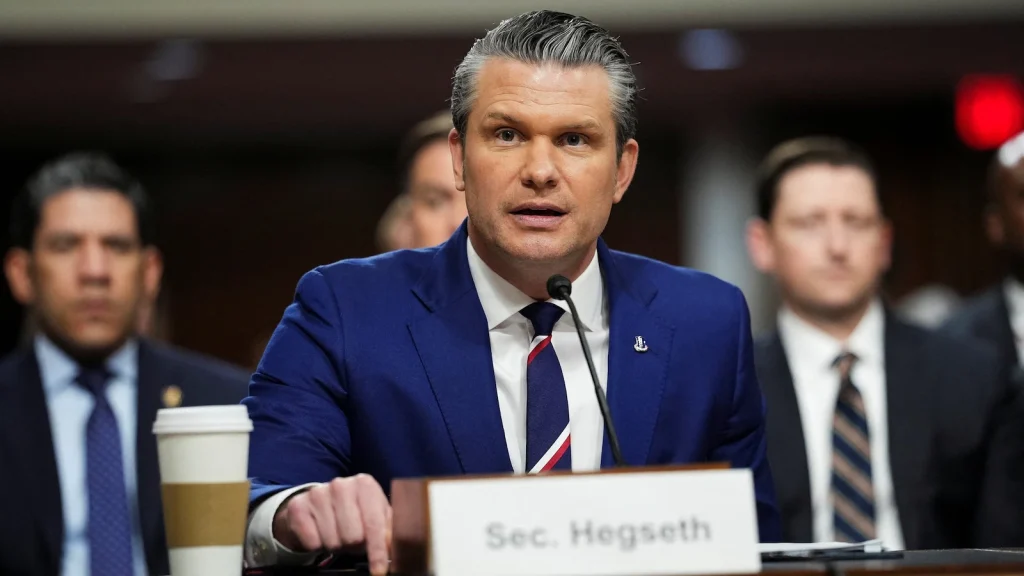
Hegseth Doubles Down on Attacking Congressional Dissenters in Iran War
Hegseth doubles down on attacking dissenters – Defense Secretary Pete Hegseth intensified his criticism of dissenting voices in Congress during a Senate hearing, emphasizing that opposition to the Iran war effort stems from internal political divides. The session, held on Thursday, saw Hegseth reiterate his claim that critics are undermining the U.S. military’s progress against Iran, a position he previously outlined during a House hearing. His remarks came as part of a broader evaluation of the Pentagon’s $1.5 trillion budget request for 2027, with the war effort now central to the debate over resource allocation and strategic priorities.
Political Rhetoric and Strategic Messaging
Hegseth framed dissenters as obstacles to a unified national strategy, accusing them of prioritizing short-term gains over the long-term mission to counter Iran’s nuclear ambitions. During the hearing, he defended the administration’s approach by highlighting the progress made in the conflict, which began in February. Critics, however, argue that the war has strained alliances and created financial strain, with some lawmakers questioning the necessity of continued military engagement.
“Defeatists from the cheap seats who, two months in, seek to undermine the incredible efforts that have been undertaken and the historic nature of taking on a 47-year threat,” Hegseth stated, framing his argument as a defense of the administration’s strategic resolve. His opening remarks highlighted the perceived divide between the military’s mission and the political opposition, which he claims is overly focused on short-term setbacks rather than long-term gains.
Financial and Political Implications
The budget hearing underscored the financial stakes of the Iran war, with the Pentagon seeking $200 billion in additional funding. Hegseth’s repeated attacks on congressional Democrats and some Republicans positioned them as the key adversaries in the war effort, a narrative that has become central to his defense of the campaign. The comptroller, Jules Hurst III, noted the war’s cost at $25 billion, raising questions about the sustainability of the military’s operations in the region.
“Mr. Secretary, you reserved more words and more time and more vitriol to condemn Democrats than you did for [Chinese President Xi Jinping] and for [Russian Federation President Vladimir] Putin combined. It’s pretty telling to me that you decided to use your words and your time for that,” Democratic Rep. Chrissy Houlahan challenged, pointing out the disparity in Hegseth’s rhetoric.
Houlahan’s critique reflects a broader debate within Congress over the rationale for the war and its economic implications. While Hegseth insists on the necessity of a strong stance against Iran, others argue that the conflict has strained relationships with allies and created a heavy financial burden. His frustration with dissent was further amplified by a protester who interrupted his testimony, symbolizing growing public and political unease.
Support for Military Actions and Global Context
Senate Armed Services Chairman Roger Wicker reinforced Hegseth’s position, asserting that the war has been a strategic success despite the loss of 14 service members. He highlighted the importance of maintaining pressure on Iran to prevent nuclear proliferation, a goal he claims aligns with national security interests. General Dan Caine, the chairman of the Joint Chiefs of Staff, echoed this sentiment, noting Russia’s efforts to destabilize U.S. initiatives in the region.
“General Caine, there’s no question that Vladimir Putin’s Russia is taking serious action to undermine our efforts for success in Iran. Is there any question about that?” Wicker pressed, emphasizing the global stakes of the conflict.
Caine’s response, which cited “actions and activities” by Moscow, validated the senator’s perspective. However, the discussion also revealed the persistent challenges of the war, including the financial toll and the need for continued public and political support. Wicker framed the conflict as a necessary measure, noting that the U.S. must ensure Iran does not acquire nuclear capabilities. “While we all mourn the tragic loss of the 14 service members who have lost their lives in this conflict, we do so knowing the world is safer without a nuclear Iran,” he stated, underscoring the administration’s rationale.