
US Taiwan policy will be watched closely during Trump’s China visit
US Taiwan Policy Will Be Watched Closely During Trump’s China Visit
Geopolitical Tensions and Strategic Conversations
US Taiwan policy will be watched – As President Donald Trump prepares to meet with Chinese President Xi Jinping in Beijing, the discussions surrounding US-Taiwan relations are expected to take center stage. Despite the ongoing Iran conflict casting a shadow over the summit, the most critical security dialogue likely to occur in private is closer to home. Secretary of State Marco Rubio highlighted this during a recent briefing with White House reporters, noting that Taiwan will remain a focal point of conversation. “Both nations recognize that any instability in the region could undermine their strategic interests,” he remarked, emphasizing the importance of maintaining a stable status quo. “The US aims to prevent any disruptive events involving Taiwan or the broader Indo-Pacific area,” Rubio added, underscoring the administration’s cautious approach to the issue.
Arms Sales and Congressional Stance
Just days before the summit, a bipartisan group of eight senators directed their attention to the $14 billion arms package approved in January. Their letter to the White House, delivered Friday, urged the administration to assert its support for Taiwan. “Be clear with Beijing that American backing for Taiwan is non-negotiable,” the senators, led by New Hampshire Democrat Jeanne Shaheen and joined by Republicans Thom Tillis and John Curtis, wrote. The US Congress has already enshrined a policy of maintaining the current Taiwan status, ensuring that China does not assert dominance over the island while the US avoids formal recognition of its statehood. This legal framework adds pressure on the administration to uphold its commitments, even as diplomatic negotiations with China unfold.
Leadership Dynamics and Strategic Rhetoric
Defense Secretary Pete Hegseth, addressing the House Appropriations Committee on Tuesday, reiterated the president’s autonomy in decision-making. “The president is about to embark on a major trip, and I will accompany him. He will finalize all related decisions,” Hegseth stated. This position aligns with the broader Trump administration strategy, where executive actions often prioritize immediate outcomes over long-term commitments. Meanwhile, retired Navy Rear Adm. Mark Montgomery, a senior director at the Foundation for the Defense of Democracies, expressed concerns that Taiwan could be a bargaining chip during the summit. “If I were a Taiwanese leader, I’d be anxious about the potential for discussions on arms sales to shift in favor of Beijing,” Montgomery warned, citing the possibility of trade-offs in the talks.
China’s Ambitions and Declaratory Language
Chinese analysts anticipate that the summit will be a pivotal moment for advancing their geopolitical objectives. With Xi Jinping seeking to solidify China’s influence in the region, the focus will likely be on securing declaratory language from Washington. “The administration is worried about the next few moves on Taiwan, not just public statements,” said a former senior government official. This strategy involves pushing for official acknowledgments of China’s position, which could indirectly support military actions against Taiwan. Such language, while seemingly symbolic, carries significant weight in shaping international perceptions and commitments.
Regional Context and Diplomatic Maneuvers
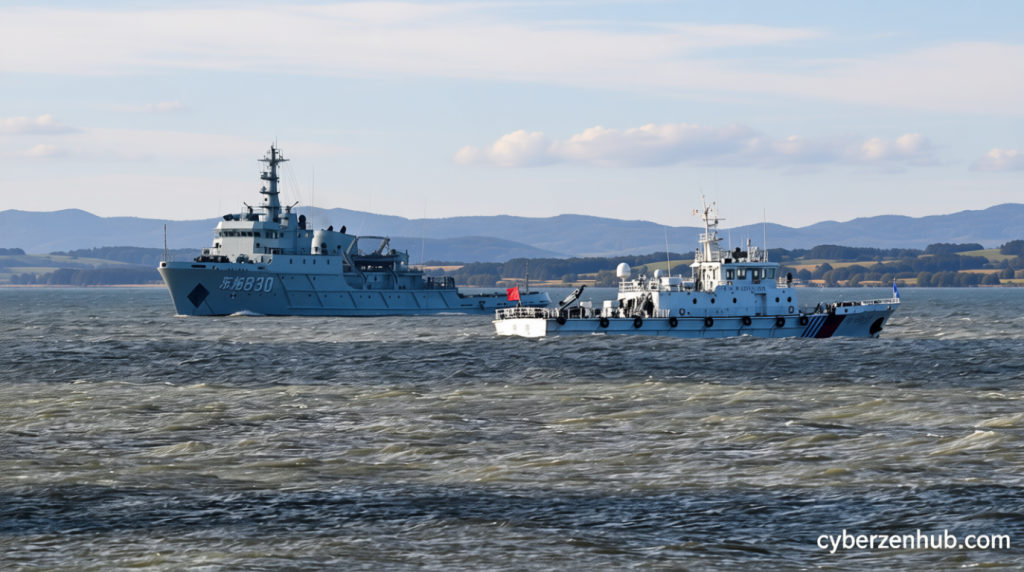
The timing of the summit coincides with heightened military activity in the region. In a Dec. 30, 2025, file photo, Chinese naval vessels patrolled near Pingtan Island in Fujian province, the closest point to Taiwan, as the People’s Liberation Army conducted drills. This visual reminder of China’s military prowess underscores the stakes of the upcoming negotiations. Additionally, the visit of the leader of Taiwan’s opposition party to Beijing earlier this month has been seen as a diplomatic move to strengthen ties with Xi’s government. “This visit signals a willingness to engage, but it doesn’t negate the urgency of the US maintaining its position,” noted a former official, highlighting the delicate balance between cooperation and confrontation.
Challenges and Uncertainties
Montgomery’s apprehension reflects broader anxieties within the Trump administration about the potential for transactional diplomacy. “There’s a risk that the president might prioritize short-term gains over long-term stability in the Indo-Pacific,” he said. This concern is amplified by the fact that Trump has historically taken a pragmatic stance on foreign policy, often prioritizing economic and strategic interests over ideological consistency. Analysts warn that even if the summit produces favorable rhetoric for China, the US military presence and congressional support for Taiwan could deter further advances. “The commitment of Congress to Taiwan remains strong, and that’s a key factor in any negotiations,” said the former official, who emphasized the importance of tangible actions over verbal assurances.
Historical Precedents and Future Implications
The US-Taiwan relationship has long been a test case for balancing strategic alliances with regional stability. During the summit, Trump’s approach to arms sales will be a critical indicator of his stance. When asked about the issue on Monday, the president stated, “I’m going to have that discussion with President Xi. President Xi would like us not to.” This exchange highlights the mutual interests of both leaders in maintaining stability, but also the underlying tension over Taiwan’s future. The senators’ letter serves as a reminder that the US Congress is prepared to intervene if the administration wavers, ensuring that Taiwan’s security is not compromised.
Global Attention and Domestic Impact
As the summit approaches, the international community closely monitors the developments. Taiwan’s position as a critical player in the Indo-Pacific region means any shift in US policy could ripple through global alliances. The $14 billion arms package, which has been stalled since January, represents a significant investment in Taiwan’s defense capabilities. Analysts suggest that the administration’s decision on this matter will not only affect bilateral relations but also signal broader commitments to regional security. “The arms sales are more than just a transaction; they’re a statement of US resolve,” said one expert, noting that the package includes advanced weaponry designed to deter potential aggression.
In the context of these high-stakes negotiations, the outcome of the Trump-Xi meeting will be scrutinized for its implications on US-Taiwan policy. Whether the summit results in a compromise or a reaffirmation of the current status quo, the discussions will shape the future of the relationship between the two nations. With the region’s stability hinging on the balance of power, the administration’s actions will be pivotal in determining the trajectory of US involvement in the Taiwan issue. As the world watches, the focus remains on how the US will navigate its commitments without provoking a conflict that could disrupt its broader strategic goals.
Meanwhile, the potential for public statements to influence outcomes is a topic of debate. Some officials argue that declaratory language is essential for reinforcing US support, while others caution that it may not be enough to counter China’s military advancements. “Capabilities matter more than words, but both are necessary,” said a former senior government official. This nuanced perspective reflects the complexity of the issue, where diplomacy and military strength must align to ensure a favorable result. As the summit draws near, the pressure on the administration to deliver a decisive message intensifies, with Taiwan’s future hanging in the balance.
Amidst these considerations, the images of military drills and patrols serve as a constant reminder of the stakes involved. The Dec. 30, 2025, photograph of Chinese ships near Pingtan Island captures the tension between Beijing’s assertiveness and the US’s strategic caution. Similarly, the Jan. 29, 2026, image of a Taiwanese Navy ship conducting exercises in Kaohsiung highlights the island’s preparedness and determination. These visuals, coupled with the political maneuvering, underscore the importance of the summit in shaping the future of the US-Taiwan relationship. As the meeting progresses, the world will be watching to see if the administration can uphold its commitments without triggering a new chapter in the region’s history.