New York Opens Archive on Post-9/11 Air Quality as Longstanding Questions Resurface
Cyberzenhub.com – New York City has begun publishing a vast collection of internal records tied to air-quality conditions in lower Manhattan after the Sept. 11, 2001 attacks, giving first responders, residents and families new access to material they have sought for decades.
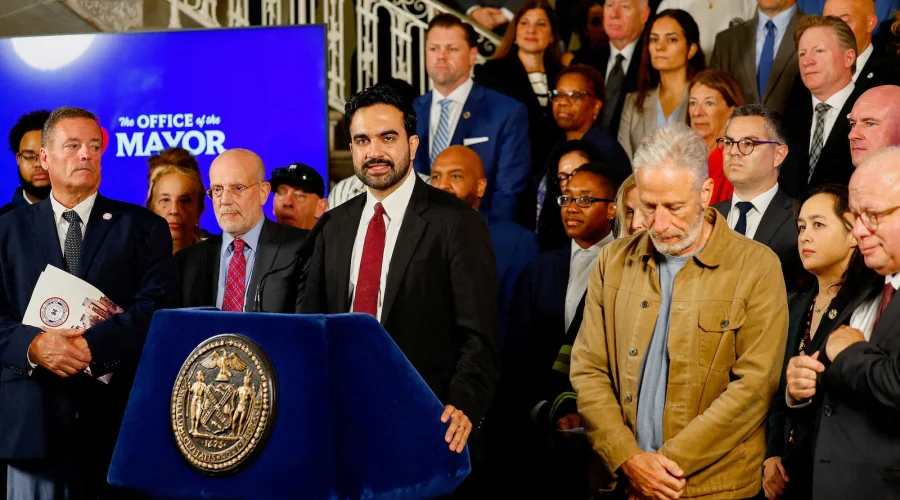
Mayor Zohran Mamdani announced the release at City Hall on Sept. 8, 2026, alongside 9/11 responders, advocates and actor Jon Stewart. The first installment contains more than 170,000 pages and is available through an online city portal. The records include communications and agency documents dating back to the Giuliani administration, which governed the city from 1994 through 2001.
The release arrives nearly 25 years after the destruction of the World Trade Center, when firefighters, police officers, recovery workers, volunteers and nearby residents faced dust and debris across lower Manhattan. For years, advocates have pressed City Hall to disclose what officials knew about potential hazards in the aftermath and when they knew it.
“People got sick because the leaders they trusted lied and told them they were safe to breathe in toxic air,” Mamdani said.
He said the publication of the archive was intended to give New Yorkers access to documentation that had long remained beyond public view.
“We are here to release these documents today because for a long time New Yorkers have known the truth, but they have been unable to see the truth in any document presented to them,” he said.
The Harding Memo and Evidence of Wider Contamination
Among the newly released materials is the so-called Harding Memo, written in October 2001 by then-Deputy Mayor Robert Harding. The memo indicated that city officials understood concerns involving air-quality risks and possible legal exposure even as public assurances stated that the air was safe.
For 9/11 health advocates, the document has carried special importance. They had pursued its disclosure for years because it could help clarify the gap between private discussions inside government and public statements made during the recovery period.
Another document in the collection records asbestos on a facade ledge at 15 John Street in July 2002. The location was away from Ground Zero, and the finding months after the attacks adds to the broader picture of how contamination concerns extended beyond the immediate site of the collapsed towers.
The documents do not erase the health consequences endured by people who worked, lived or attended school in the area. They may, however, provide families and researchers with a more complete account of official decision-making during one of the most difficult periods in the city’s history.
Settlement Ends Records Lawsuits
The city also disclosed a settlement in two lawsuits filed by 9/11 Health Watch. The advocacy organization had sued to compel publication of the records after repeated efforts to obtain them.
Freedom of Information Act requests had been submitted over many years. City officials said that 68 boxes of records were discovered in a city office only last year, a development that renewed the push for their review and public release.
The issue is especially significant for people living with illnesses connected to the aftermath of the attacks. Nearly 6,000 people have died from 9/11-related illnesses, while many others continue to experience chronic health problems, 9/11 Health Watch has said.
Those figures reflect a legacy that extends far beyond the day of the attacks. Exposure concerns have affected people who participated in rescue and recovery work, as well as others who spent time in lower Manhattan while cleanup and rebuilding continued.
A Fight for Recognition
Stewart, who has spent years advocating for health benefits for 9/11 responders, emphasized that many people seeking information had already endured serious illness while trying to make government agencies acknowledge the dangers they faced.
“I’m not saying the information may have changed the outcomes, unfortunately, for their families, but I guarantee you it would not have been the struggle that it was to get people to recognize what they all knew … that there was poison in the air,” Stewart said.
His remarks underscored why the archive matters to more than historians. For affected families, the records can offer evidence connected to years of disputes over recognition, treatment, compensation and accountability.
Mamdani did not single out former mayors for blame, saying he would “leave that to New Yorkers.” Still, he said successive city administrations had failed people seeking straightforward answers.
“Administration after administration has ignored those calling for answers and clarity,” Mamdani said.
The mayor said New York would continue using its resources to promote federal programs created to support people affected by 9/11-related health conditions. The document release represents an initial tranche rather than the end of the city’s work, leaving open the prospect that additional records may further illuminate the response to the catastrophe.
For New Yorkers who have waited years to see the city’s internal files, the archive offers a chance to examine a central question of the post-9/11 era: how public officials assessed the danger in the air, and whether the people asked to return to lower Manhattan were given a full and honest account of the risks.
Related Reading
Frequently Asked Questions
What is NYC Mayor Mamdani releases thousands of long?
NYC Mayor Mamdani releases thousands of long is the main topic of this guide. The article explains the context, practical details, and next steps readers should understand.
Why does NYC Mayor Mamdani releases thousands of long matter?
NYC Mayor Mamdani releases thousands of long matters because readers are looking for a useful answer, not just a short summary. Good content should match search intent and help them decide what to do next.